REVIEW · ROME
Private Colosseum, Roman Forum, and Palatine Hill Guided Tour
Book on Viator →Operated by City Wonders Ltd · Bookable on Viator
Gladiator tales feel real with a private guide. This 3-hour route pairs reserved entry to the Colosseum with an art history walk through the Roman Forum.
I like that the tour stays focused on what you can actually see and interpret, not just dates and names. You’ll get specialized commentary you can steer toward architecture, art, and broader Roman culture.
One thing to weigh is the effort and timing: this is a walking-heavy plan, and you may still hit security checks before entry, plus the price is steep for two people.
Key Things I’d Bookmark Before You Go
- Private, your group only: no crowds pushing you along, and your guide can adjust on the fly.
- Colle Oppio start: you begin with big views before you even enter the Colosseum.
- Art history lens: the guide connects design, space, and symbolism, not just the gory headlines.
- Arch of Constantine stop: a quick detour that helps you read the Forum like a route and a stage.
- Palatine Hill viewpoint time: you climb for panorama and ties to Circus Maximus.
- Mobile ticket + reserved access: smoother entry planning, even if security can still slow things down.
In This Review
- Why This Private Colosseum and Forum Tour Feels Different
- Colle Oppio to the Colosseum: A Smarter First Impression
- Inside the Arena: Brutal Stories, Explained Through Design
- Palatine Hill After the Colosseum: Views That Put Names Back on the Map
- Via Sacra and the Roman Forum: The Sacred Way as a Walking Route
- What Customizing the Art History Commentary Means in Real Life
- Price and Value: Paying for Reserved Entry and a Personal Guide
- Practical Tips That Actually Matter at These Sites
- Should You Book This Private Colosseum, Forum, and Palatine Hill Tour?
- FAQ
- How long is the Private Colosseum, Roman Forum, and Palatine Hill guided tour?
- Is admission included for the Colosseum, Roman Forum, and Palatine Hill?
- What does the tour include besides the guide?
- Is this a private tour or a group tour?
- Do I need ID to enter the Colosseum?
- Can I cancel and get a full refund?
Why This Private Colosseum and Forum Tour Feels Different
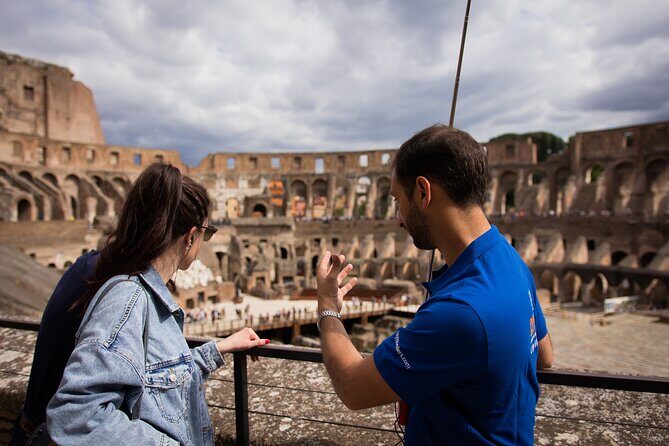
Rome’s ancient sites are famous for a reason. Still, if you arrive with only guidebooks, the Colosseum can feel like a big stone shell and the Forum can blend into a pile of walls. This private tour tries to fix that by treating the ruins like art and design, not just leftovers.
The biggest win is that the guide is specialized and you can shape the angle. Ask for more architectural talk, more symbolism, or more culture and daily life, and your guide can pitch the story that way. That matters at the Colosseum, where details like entrances, sightlines, and the way people moved through space can change how you understand what it was.
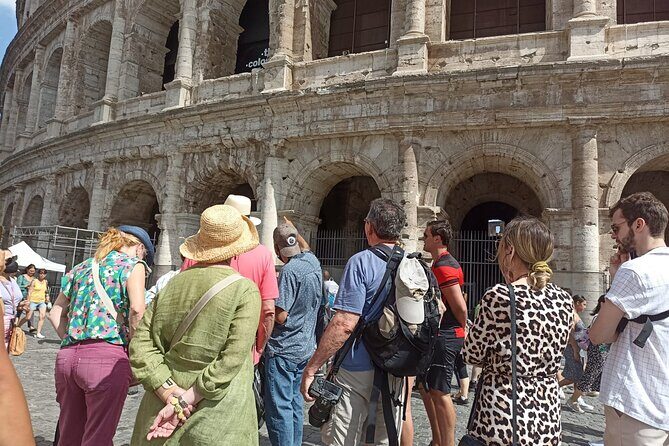
I also like that it’s a true private setup. You’re not sharing the day with a moving bus of strangers. That gives you a better shot at questions, slower pacing where you care, and quicker adjustments if something is closed or delayed.
The main consideration is value. At $636.06 per group (up to 2), you’re paying for reserved access plus guide time. That cost can sting if you’re the type who only needs a quick look. But if you enjoy learning how places worked and why they were built that way, it often feels like paying for a front-row seat to understanding the stones.
Colle Oppio to the Colosseum: A Smarter First Impression
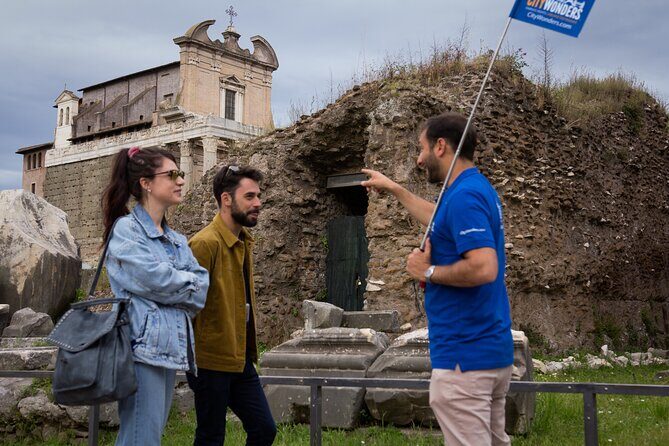
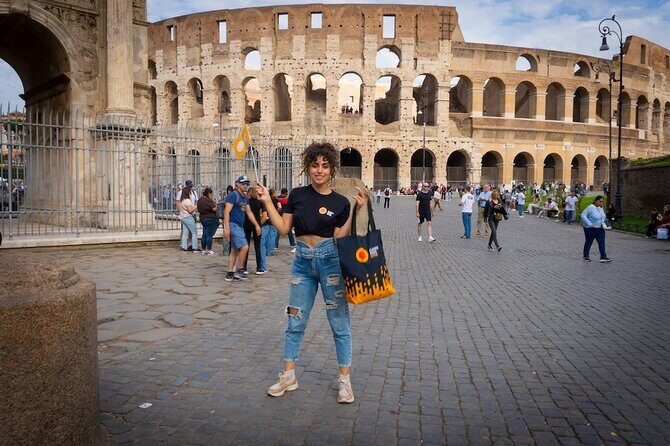
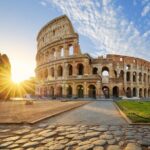
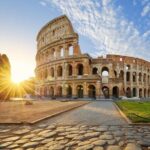
The day starts at Largo Gaetana Agnesi, then the route takes you to Colle Oppio, a hill viewpoint that gives you instant context. Before you step inside, you get the big picture of how the Roman Forum area sits relative to the Colosseum. That first look is more than pretty scenery; it helps your brain map the rest of the walk.
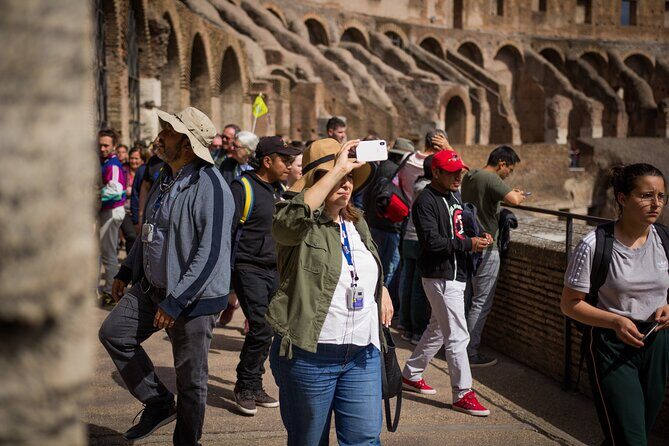
From there you head down and enter the Colosseum via the main entrance. This is where the private format earns its keep. You get guided movement through a confusing, security-and-lines environment, and you’re not trying to figure out where to stand for the best views.
The timing is built for momentum. The Colosseum portion is about 2 hours, which is enough time to do more than just orbit the building. You should expect a paced walk around key areas, with stops that make sense for photographs and for hearing the stories tied to what you’re looking at.
One practical note: even with reserved access, the tour can still experience delays due to security checks. If you hate wasting time standing, plan to stay flexible and treat security as part of the Rome rhythm.
Other Forum, Palatine & Colosseum combo tours we've reviewed
Inside the Arena: Brutal Stories, Explained Through Design
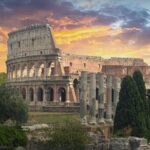
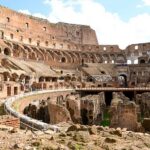
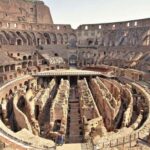
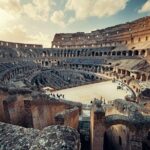
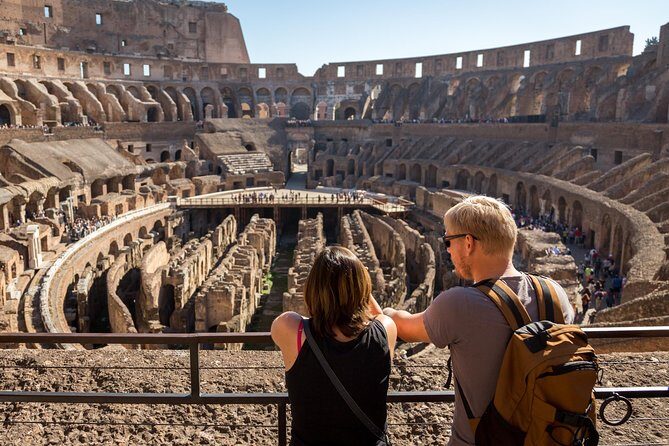
The Colosseum is not subtle. That’s part of the point. You’ll walk through areas tied to the arena and hear tales about gladiator combat and other harsh events that took place there. But the art history framing helps you see past the shock value.
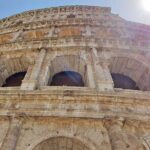
Look at the building as a machine for spectacle. When your guide connects the shape, the movement of crowds, and the visual impact of space, the Colosseum stops being a horror-themed Instagram backdrop and becomes a working venue. That’s where the “art history” part pays off: you learn how architecture carries meaning.
You’re also likely to get a clearer sense of why certain spots feel dramatic. For example, the perspective from inside and the way people would have seen each other can explain why the building was so effective at turning public life into performance.
Some versions of access may include additional areas beyond the standard walk, and you might find that the experience can include unusual zones when permitted. If underground or off-the-usual-path areas are available on your date, that bonus can make the Colosseum feel even more time-locked, like you’re standing inside the bones of the original show.
Palatine Hill After the Colosseum: Views That Put Names Back on the Map
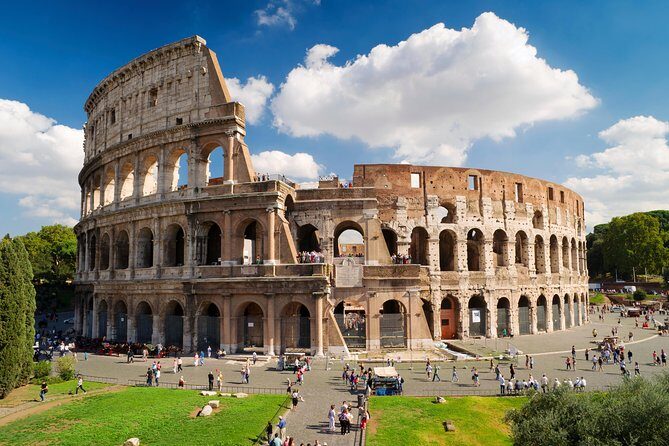
After the Colosseum, you move on to Palatine Hill, another of Rome’s Seven Hills. On paper, 30 minutes sounds short. In practice, it’s the right duration for a targeted viewpoint climb and a few key connections.
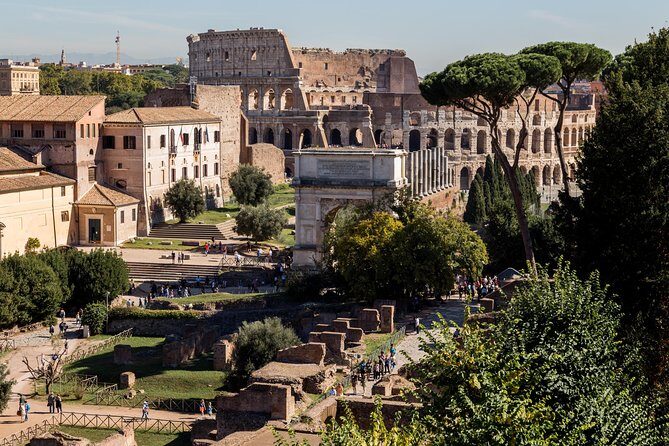
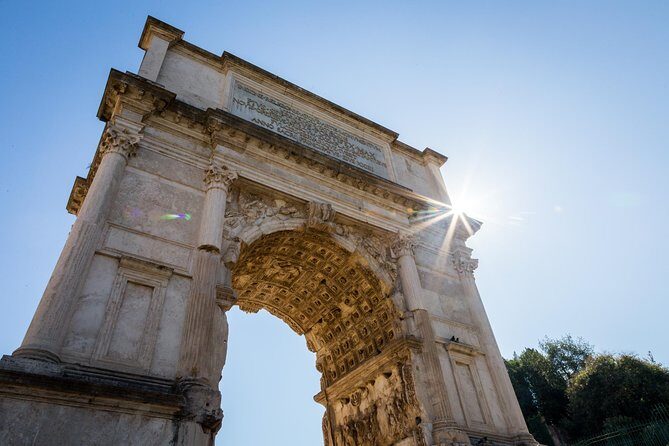
You’ll stop at the Arch of Constantine on the way. Even if you’ve seen photos of it, a guided stop helps you place it in the story of power and arrival in the city. It’s the kind of monument that becomes more legible when you’re told what it’s pointing to and how it fits the route people would have traveled through.
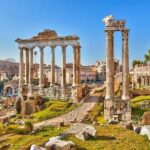
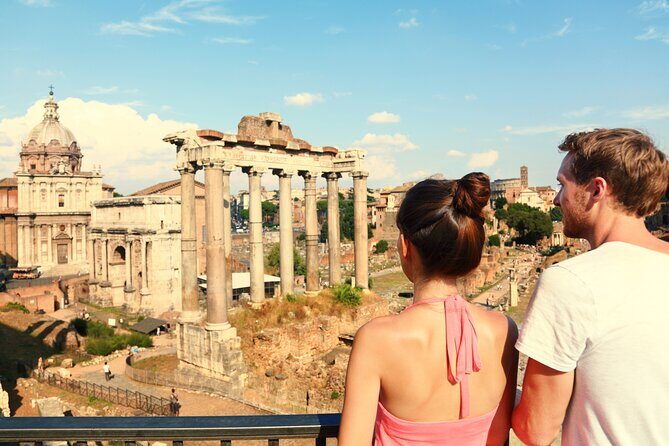
Then comes the hill walk. Palatine is where you connect the Forum area with the higher residential and symbolic zones of Rome. You’ll get a view over the Roman Forum, plus a look toward Nero’s Circus Maximus, where chariot races once ran. That pairing is useful because it turns two separate ruins into one larger city layout.
The drawback here is time pressure. Thirty minutes means you won’t have time to wander randomly. You’ll get the guide’s best vantage points and then move on. If you’re the type who wants to linger for an hour and sketch every column, this section might leave you wishing for more.
Via Sacra and the Roman Forum: The Sacred Way as a Walking Route
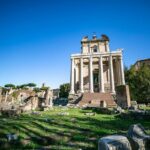
Next is Foro Romano, with Via Sacra, the so-called Sacred Way, as your final main walking stretch. This isn’t just a nice boulevard through ruins. It was a main processional route that connected major political and ceremonial spaces, including the Colosseum area and beyond toward Capitoline Hill.
Walking Via Sacra with a guide changes what you notice. You start seeing the Forum as a stage set with entrances, movement corridors, and sightlines built for public ceremonies. When your guide ties architecture to triumph processions, it helps you understand why the city’s power centers were arranged where they were.
This stop is about 30 minutes, and the tour ends there so you can keep exploring on your own. That approach works well because you’ll have a better map of where you want to go next, whether you’re chasing specific buildings or simply want to re-see the Forum without someone setting the pace.
One small word of advice: when you finish a guided walk, you’ll want a quick plan for your next hour. Pick one or two areas to revisit right away, because Roman ruins turn into a choose-your-own-adventure maze once you’re on your own.
What Customizing the Art History Commentary Means in Real Life
The tour is marketed as private with an art history specialist who can tailor the commentary based on your interests. In normal tours, “customize” often means your guide asks what you like and then keeps reading the script. Here, you can actually use that flexibility because the sites naturally support multiple angles.
If you care about architecture, ask your guide to point out design logic: how spaces frame views, how the Colosseum’s geometry supports crowd flow, and how monuments like the Arch of Constantine function as visual anchors. If you care about culture, you’ll likely get more on public spectacle, status, and how people lived and moved through the city.
The feedback on guides is strong, with names like Viola, Olga, Emanuela, Agata, and Alessandra showing up in standout experiences. People also highlight guides who kept their explanations tight even when questions came fast. If you want that kind of detail-driven storytelling, it’s smart to request a guide whose style you think you’ll match. If the operator allows it, you can also add your interests when booking so they can prepare the right angle in advance.
Keep expectations realistic, though. English and teaching style can vary by guide. Since the tour is short at only 3 hours, you’ll feel any mismatch in communication more than you would on a longer multi-day tour.
Other Roman Forum tours we've reviewed
Price and Value: Paying for Reserved Entry and a Personal Guide
At $636.06 per group for up to 2 people, the cost isn’t cheap. But you are paying for a few concrete things:
- Reserved access to the Colosseum, Roman Forum, and Palatine Hill
- A private guide for your group only
- A Colosseum entrance ticket plus the reservation fee portion (valued at €18 per person and €2 per person)
The tour listing also notes that the remaining cost covers guide services and other support. So even though the ticket portion is relatively small compared to the total price, the guide time and the access handling are what you’re really buying.
This can be great value if:
- You hate waiting around and want a guided plan that reduces decision fatigue.
- You care about interpretation, not just photography.
- You want the freedom to stop for questions and move at a pace that fits your group.
It may not be value if:
- You’re fine wandering independently and reading a few signs.
- You want lots of free time for exploring without structure.
- You’re sensitive to walking volume. This route is designed as an efficient loop.
For two people, the private setup often feels closer to a “premium” experience than a budget one. If you’re traveling solo, you’ll feel the cost more, since it’s still priced per group.
Practical Tips That Actually Matter at These Sites
Start with the paperwork. You’ll need to provide all participant names at booking so entry can be processed for the Colosseum. At the gate, you also need to show a valid government-issued ID or passport that matches the reservation name. Name changes are not permitted once confirmed. That’s the kind of Rome rule that can turn a dream day into a frustrating delay, so double-check spelling before you arrive.
Next, expect walking. The tour is built around Colosseum-first and a hill walk up to Palatine. The instruction says moderate physical fitness is required. If you’re pushing a stroller or managing mobility issues, this might not be the best plan, because the time windows are tight.
Also plan for security. Even with reserved access, the tour may experience delays clearing security checks. If you schedule lunch late and stay flexible, you’ll feel in control instead of rushed.
Finally, use the meeting points like a pro. The start is at Largo Gaetana Agnesi. The end is on Palatine Hill at Parco archeologico del Colosseo, Via di S. Gregorio, 30. Since the end point is different from the start, you should have a simple exit plan for after the tour ends, like a specific pickup spot or a clear direction for your next stop.
If you’re a photo person, bring the usual camera instincts: quick lenses for close details, and a charged phone for navigating and saving maps. The Colosseum and Forum are photo-friendly, but the best angles come from where your guide stops you, so don’t waste time sprinting ahead.
Should You Book This Private Colosseum, Forum, and Palatine Hill Tour?
Book it if you want a guided, art history-driven way to understand Ancient Rome’s big hitters without guesswork. The reserved access and private pacing are a big deal in a place that can feel overwhelming. If you’re the type who enjoys learning how buildings work and what they signaled to people, this tour is set up for that.
Skip it if you mainly want a casual wander, you don’t want to pay for interpretation, or you’re worried about walking and timing. Also consider whether you’d enjoy going without a structured route. If you do, a self-guided visit can be cheaper and still rewarding.
My rule of thumb: if you can picture yourself asking questions at the Colosseum and actually caring about the story behind the spaces, this private tour is a solid investment.
FAQ
How long is the Private Colosseum, Roman Forum, and Palatine Hill guided tour?
The tour lasts about 3 hours.
Is admission included for the Colosseum, Roman Forum, and Palatine Hill?
Yes. Admission tickets are included for the Colosseum and the other listed sites during the tour.
What does the tour include besides the guide?
You get a private guided walking tour with reserved access, plus a mobile ticket. The Colosseum entrance ticket and reservation fee are part of what’s included.
Is this a private tour or a group tour?
It’s a private tour/activity, meaning only your group participates.
Do I need ID to enter the Colosseum?
Yes. Each participant must show a valid government-issued ID or passport that matches the name on the reservation. Name changes are not permitted once confirmed.
Can I cancel and get a full refund?
Yes. You can cancel up to 3 days in advance for a full refund, but if you cancel less than 3 days before the start time, the amount paid will not be refunded.