REVIEW · ROME
Rome: Colosseum Arena, Roman Forum and Palatine Hill Guided Tour
Book on Viator →Operated by Tours & Tours · Bookable on Viator
The Colosseum feels louder in person. I love that this tour strings together three must-see sites with minimal hassle, and I also love the audio headsets, which make the guide easy to hear even when crowds surge. One thing to consider: it’s still about three hours of walking over uneven stone and hills, so comfortable shoes really matter.
You’ll meet at Via delle Terme di Tito 93 and finish back there, so you’re not figuring out a complicated route across town. And because the schedule is built around timed entry, you’ll get into the Colosseum fast-moving flow instead of wandering around with a half-plan and a big map.
In This Review
- Key points to know before you go
- What You Really Get From This Colosseum-Forum-Palatine Combo
- Entering The Colosseum Through the Gladiator Gate
- Roman Forum Ruins and Power Plays
- Climbing Palatine Hill for Views and Villa Remains
- Audio Headsets, Small Groups, and Crowd-Control Reality
- Price and Value: Paying for Tickets Plus the Guide Plan
- Meeting Point and Day-Of Tips That Prevent Headaches
- Who This Tour Fits Best (and Who Should Pass)
- Should You Book the Colosseum Arena + Forum + Palatine Tour?
- FAQ
- How long is the Rome Colosseum Arena, Roman Forum and Palatine Hill guided tour?
- Is Colosseum arena access included?
- What language is the tour offered in?
- Where do I meet the tour group?
- What documents do I need for entry?
- What happens if it’s raining or cold?
Key points to know before you go
- Arena access via the gladiator’s route means you’re not only looking at the Colosseum from the outside.
- Headsets help you follow the story without constantly craning your neck.
- Small group size (max 25) keeps the tour feeling more personal than a giant herd.
- Forum + Palatine Hill gives you both the action center (politics, religion) and the view from Rome’s high ground.
- Arena floor access can be restricted in bad weather, so expect a Plan B from the venue.
What You Really Get From This Colosseum-Forum-Palatine Combo
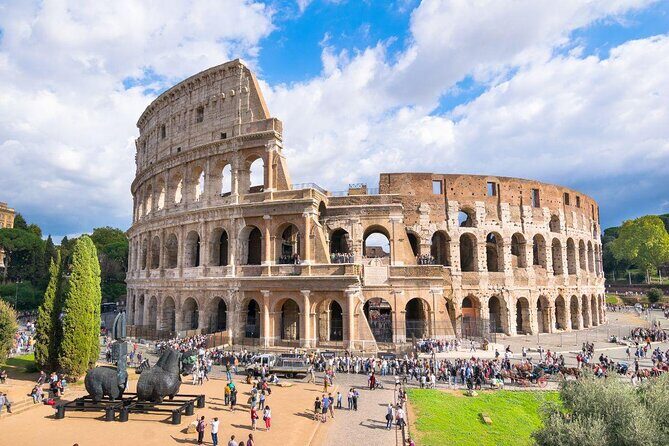
This is the kind of Rome tour that saves energy. Instead of splitting your day into multiple ticket lines and meeting points, you hit the big trio in one go. The format is straightforward: Colosseum first, then the Roman Forum, then the climb up Palatine Hill.
The value is in the mix. Yes, the Colosseum is the headline, but the Forum and Palatine Hill are where the place starts to make sense. You see the ruins, then you get the human stories that explain why these spaces mattered to daily life and power in Ancient Rome.
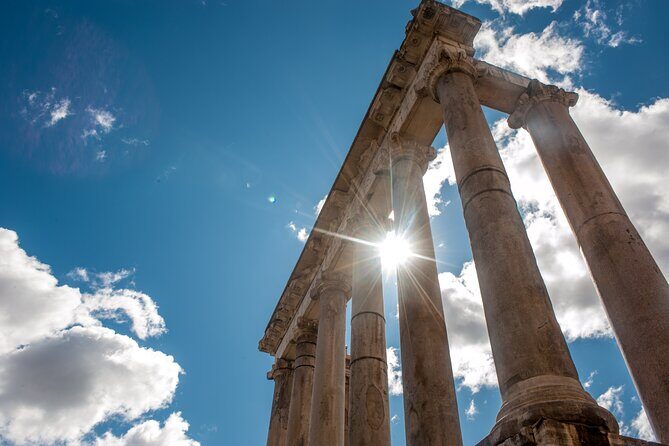
You also get more than just a walk-by. The Colosseum stop includes arena-level access, and the Forum stop includes specific ruins such as the House of the Vestal Virgins and the Temple of Saturn. If you’ve ever wished you could ask questions while standing in the exact spot where something happened, this tour is built for that.
And the audio headsets are not a gimmick. In the Forum and around the Colosseum, the sound environment is chaotic. With headsets, you can keep your eyes on what you’re seeing instead of hunting for where the guide stands.
Other Forum, Palatine & Colosseum combo tours we've reviewed
Entering The Colosseum Through the Gladiator Gate
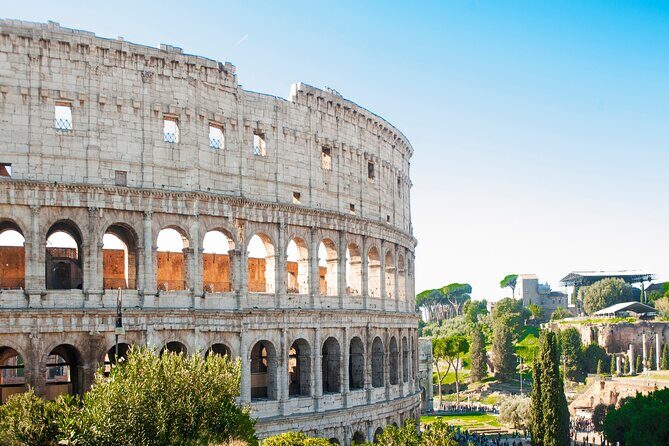
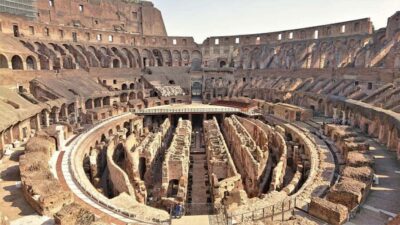
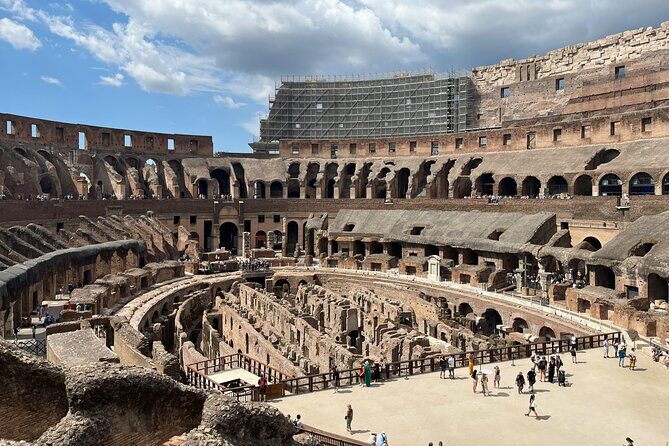
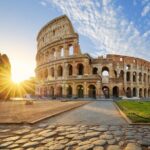
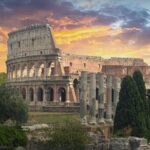
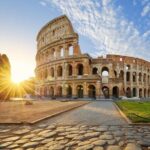
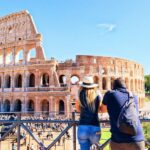
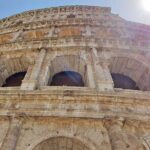
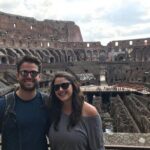
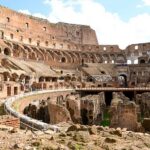
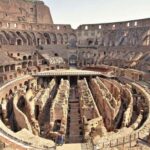
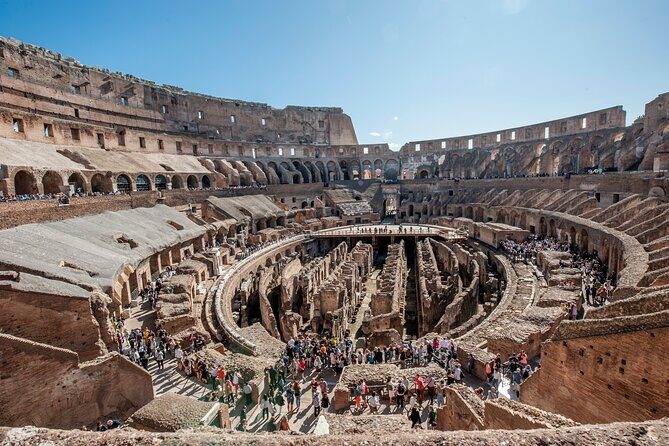
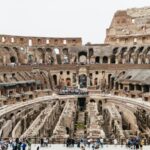
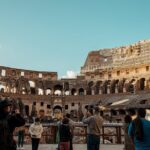
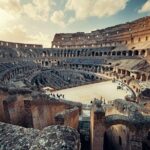
The moment you walk into the Colosseum, it hits you as a real space, not a photo. This tour takes you straight in and focuses on the arena floor experience, including going through the gladiators’ gate. You’ll stand where gladiators entered and then look down into the arena dungeons, followed by a skyward moment to take in the scale.
The Colosseum stop runs about 45 minutes. That’s enough time to see the highlights without feeling like you’re trapped in a long lecture. You’ll also get commentary that helps you picture the action and the architecture, including how the arena functioned as a designed stage.
Heads-up on timing: the arena floor can be affected by weather. If rain, snow, or frost hits, the venue may close off the arena floor without notice. In that scenario, you can still enter through the gladiators’ gate, but you may not be allowed onto the arena floor itself. If you’re booking for the arena-floor moment, build flexibility into your day.
One more practical note: Colosseum entry requires your details to match your documents. Your full name must be included exactly as it appears on your passport or ID, and your voucher needs all travelers’ full names. If you show up with a mismatch, you can get stuck in the worst kind of delay: one you can’t fix on the spot.
Guides vary by departure, but I’ve seen names like Francesco, Matteo, and Maria mentioned for making the Colosseum portion especially memorable. If you have a choice in guide notes, pick the option that emphasizes English guidance and clear pacing.
Roman Forum Ruins and Power Plays
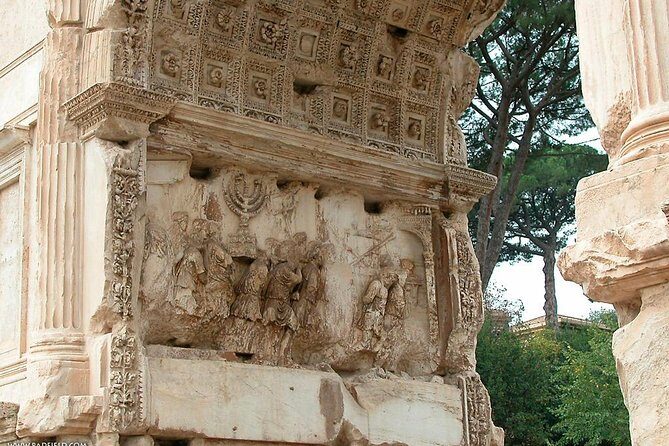
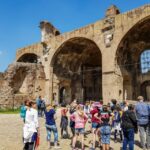
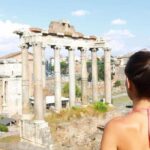
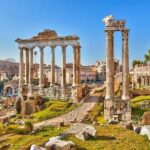
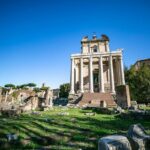
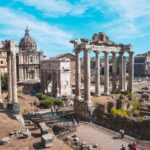
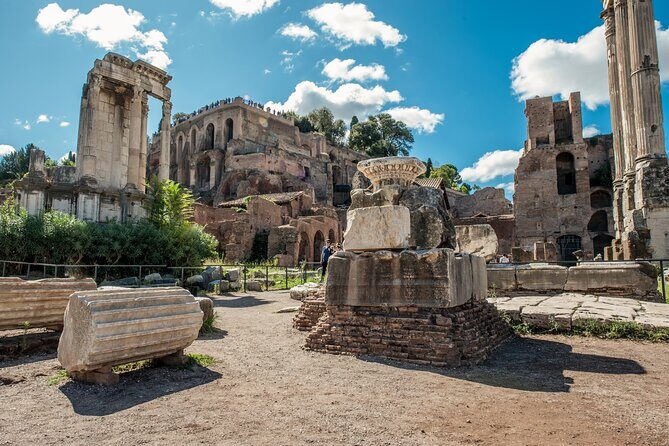
After the Colosseum, the tour moves into the Roman Forum, Rome’s older version of a central command center. This is where politics, religion, and public life all collided. At ground level, it’s easy to see only broken columns, but on this tour you’ll connect the ruins to real roles and drama.
The Forum stop runs about 1 hour 15 minutes. You’ll look at major surviving sites, including the House of the Vestal Virgins and the Temple of Saturn. Your guide weaves the stories around what you’re seeing, and the pacing is designed to keep you from getting overwhelmed by names and stone.
Crowds can be intense here. That’s exactly why the headsets matter. Even when you’re squeezed into a tight flow, you can hear the story and keep tracking the guide without constantly turning around to find the voice.
Also, the Forum is where your legs start to feel it, because you’re moving over uneven terrain. If your itinerary includes other walking-heavy sights later, plan an easier afternoon. You’ll be glad you did.
If you’re the type who likes to ask follow-up questions, this part can be the best payoff. The Forum is full of “wait, what happened here?” moments, and the guide’s explanations help you stop guessing and start understanding.
Some guides have been called out for strong English and for answering questions directly. Names like Amr Sonbol and Marcus show up in feedback for being especially interactive and clear in how they explained what you were standing on. Even if your guide isn’t called out by name, the structure here is what supports that experience: clear narration tied to visible landmarks.
Climbing Palatine Hill for Views and Villa Remains
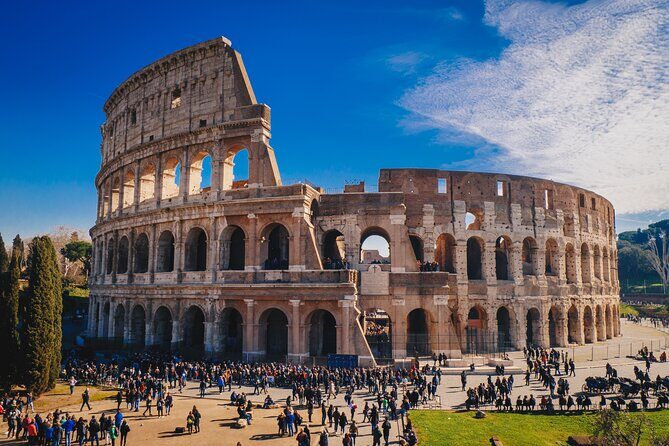
Palatine Hill is where Rome switches from ruins you walk through to a viewpoint you experience. This tour climbs Palatine Hill to wrap up your visit, about 1 hour on the hill itself. It’s tied to the idea of Rome’s founding and, later, to the fact that the area became home to some of the wealthiest residents.
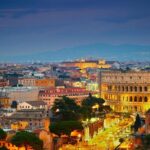
You’ll see remains of opulent villas, and you’ll also get one of the best sightlines over the city from this elevation. The view is not just a photo moment. It helps you understand how the city’s layout and power concentrated around key locations.
This is also the part of the tour that can feel tougher. Palatine Hill includes stairs, uneven surfaces, and uphill movement. Reviews mention that the walking into Palatine Hill can be a problem for mobility. So if your group includes anyone with limited mobility or balance issues, consider whether a less hilly option would fit better.
Even so, if you want the feeling of stepping from history into a living panorama, Palatine Hill delivers. The hill makes the whole day click: the Colosseum as spectacle, the Forum as political engine, and the hill as elite residence with control over what the city could become.
The best advice here is simple: pace yourself. Don’t try to win the climb. You’ll enjoy the view more when you arrive breathing normally instead of in emergency mode.
Guides like Lucie and Valeria have been highlighted for adding extra meaning at the end of the tour, turning the Palatine stop into a stronger finale rather than just a closing walk. That’s a common pattern when the guide keeps connecting the hill’s remains to the bigger story.
Audio Headsets, Small Groups, and Crowd-Control Reality
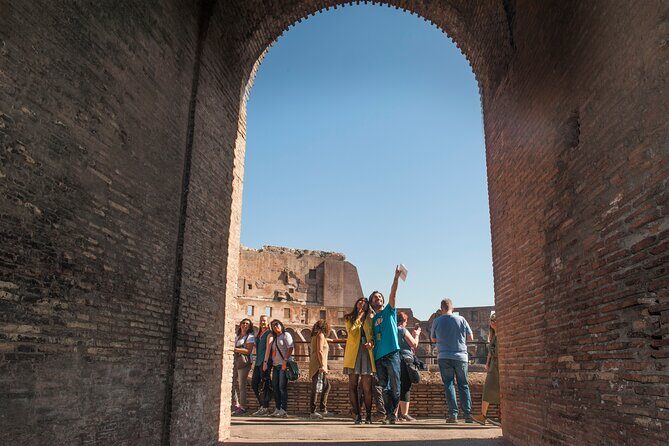
This tour includes live guidance plus headsets. That combo is the difference between following the story and constantly losing it when other people block your line of sight.
With headsets, you can keep your attention on the ruins. You also avoid that common Rome frustration of standing three steps behind someone and missing the guide’s explanation entirely. In busy zones like the Colosseum and Forum, that’s not small. It’s a major quality-of-life upgrade.
Group size matters too. With a maximum of 25 travelers, you’re not always stuck behind dozens of people. It’s still busy, but it’s more manageable than the biggest mass tours.
One more language tip: the experience is offered in English, but I’ve seen confusion happen when people booked the wrong language option. Before you lock anything in, double-check that you’re selecting the English version. If you accidentally choose another language, there’s no good fix on the day.
Another practical crowd-control point: some parts of the Colosseum complex have uneven walkways. You’ll likely be fine if you wear proper shoes, but don’t assume it’s like walking on smooth pavement.
Overall, this tour is designed for crowd survival. The headsets do the heavy lifting. Your job is to show up ready to walk.
Other Roman Forum tours we've reviewed
Price and Value: Paying for Tickets Plus the Guide Plan
The price is $70.81 per person for about 3 hours. What makes it feel fair is what’s included.
Your ticket package is built in. The Colosseum entrance ticket with arena access is valued at €24, and there’s also a Colosseum reservation fee valued at €2. In plain terms, part of what you pay is buying timed entry and the arena access that lets this tour do what it claims.
Transportation and hotel pickup are not included. But that’s pretty normal for Rome walking tours. The good news is the meeting point is near public transportation, so you can usually keep your logistics simple.
So where does the rest of your money go? Mainly into the live guide and the timed, organized flow through all three sites. If you were to self-tour, you could save money on the guide. But you would lose the structure, the context at each stop, and the “what am I looking at” explanations that make these ruins come alive.
If you’re on a short visit and you want maximum payoff from a half-day, this combo tends to be a good use of time. If you prefer to wander slowly and read everything at your own speed, you might choose something lighter instead.
Meeting Point and Day-Of Tips That Prevent Headaches
Meet at Via delle Terme di Tito, 93, 00184 Roma RM, Italy. The tour ends back at the same meeting point, which makes planning easy.
This is the kind of tour where being early helps. Even if you think you’re early enough, Rome can surprise you with foot traffic and confusion at crowded entry points. Aim to arrive with a buffer so you can locate your group without stress.
Bring the right documents. You must present a valid passport or ID that matches the name on your booking. Also, your voucher must include all travelers’ full names. Missing or mismatched names can cause entry problems at the ticket office.
Wear comfortable walking shoes. The surfaces are not flat, and you’ll spend real time moving between sites. Leave large backpacks at home if you can. Aerosols and sharp objects aren’t allowed, and big bags can cause delays.
If the arena floor is closed due to weather, don’t panic. The tour notes that arena-floor access may be prohibited while other entry routes remain available. Still, it’s smart to mentally plan for a version of the Colosseum stop that might be slightly less dramatic than the arena-floor ideal.
A little preparation goes a long way. You’ll enjoy the story more if you’re not busy solving problems at the gate.
Who This Tour Fits Best (and Who Should Pass)
This tour fits best if you want an efficient hit of Rome’s top landmarks with clear explanations and minimal decision-making. If you like structure, or if this is your first time seeing the Colosseum and you want it interpreted, you’ll probably feel glad you booked.
It’s also a good choice if you struggle with self-guided history reading. The guide provides the connections you’d otherwise have to look up while you’re standing in the middle of ruins.
It may be less ideal if your group is sensitive to walking time and uphill terrain. Palatine Hill can be tough, and the whole day includes enough movement that a “just standing there” approach won’t work.
Also, remember that the arena floor can be restricted in bad weather. If the arena-floor access is your one must-have feature, keep an eye on the forecast and be ready to roll with the venue’s rules.
From the feedback I’ve read, guide quality seems to make a big difference. Some names that have been praised include Francesco, Lucie, Valeria, Maria, Frederico, Matteo, Amr Sonbol, and even Marcus for strong pacing. If you get one of the great communicators, your experience will likely feel much richer.
Should You Book the Colosseum Arena + Forum + Palatine Tour?
I’d book it if you want the highest “wow per hour” ratio in Rome. The arena access, the audio headsets, and the fact you cover Forum and Palatine in one connected plan make it a strong time-saver.
I’d think twice if your group has mobility limits, or if you’re planning a very tight day afterward. This isn’t a gentle stroll. It’s an outdoor tour with stairs, hills, and crowds.
If you do book, do three things:
- Bring the exact ID you’ll use at entry, and double-check your full names.
- Wear shoes you can trust on uneven stone.
- Keep your expectations flexible if the arena floor closes due to weather.
If that sounds like you, this tour is a solid way to connect the Colosseum spectacle to the Forum’s power and the hill’s views, without wasting half a day figuring it out.
FAQ
How long is the Rome Colosseum Arena, Roman Forum and Palatine Hill guided tour?
It lasts about 3 hours total.
Is Colosseum arena access included?
Yes. Your ticket includes arena access, with entry through the gladiators’ gate.
What language is the tour offered in?
The tour is offered in English.
Where do I meet the tour group?
The meeting point is Via delle Terme di Tito, 93, 00184 Roma RM, Italy. The tour ends back at the same meeting point.
What documents do I need for entry?
You need a valid passport or ID document, and the name must match what you provided when booking for successful entry to the Colosseum and Roman Forum.
What happens if it’s raining or cold?
In bad weather, the arena floor may be closed off without notice. You can still enter through the gladiators’ gate, but access onto the arena floor may be prohibited.