REVIEW · ROME
ROME: colosseum gladiator arena forum& palatine guided tour
Book on Viator →Operated by getitalytours · Bookable on Viator
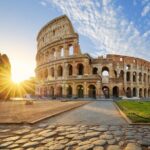
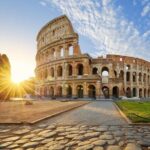
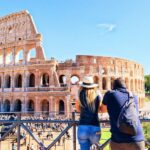
This is the Rome hit list you can actually manage. I love walking the Colosseum with a guide who makes the building feel usable, not just dramatic, and I love adding Roman Forum + Palatine Hill so you see the city’s full rhythm instead of one big stop. The only real drawback is the security screening—peak times can add wait time at the entrances that has nothing to do with the ticket line.
What makes this tour feel worth it is the structure: you get the big-ticket site first, then the Forum’s civic pulse, then Palatine’s older layers. You also get the benefit of a private setup, meaning it’s just your group with an English-speaking professional guide, and that usually helps questions and pacing.
You’ll want moderate stamina. The time on your feet adds up, especially in the Colosseum and the Forum areas, and you’ll be doing a fair amount of standing and walking through archaeological spaces.
In This Review
- Key things to know before you go
- The value of bundling the Colosseum with Forum and Palatine Hill
- Where to meet and how the timing usually feels
- Colosseum entrance: what you get and how to use it
- The 1st and 2nd rings: getting real perspective on the arena
- Roman Forum: the civic engine behind the spectacle
- Palatine Hill in 25 minutes: what you can realistically grasp
- Guide impact: Enri and Simona’s style of explaining Rome
- Price and what’s included: do the math with tickets
- Weather, crowds, and security screening: how to stay sane
- Who this tour fits best (and who should choose another plan)
- Should you book this Colosseum gladiator arena Forum and Palatine guided tour?
- FAQ
- Is the tour offered in English?
- How long does the experience take?
- Where do I meet and where does it end?
- What tickets are included?
- Do I need to bring identification?
- Will weather stop the tour?
- How soon will I receive confirmation?
Key things to know before you go
- Arena floor upgrade available: choose an option that includes the arena entrance and more of the Colosseum experience.
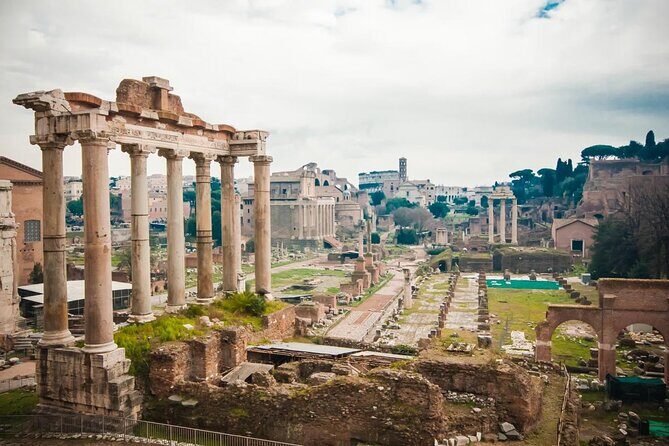
- Smart add-ons, not random stops: Roman Forum (politics, trials, speeches) pairs naturally with the Colosseum.
- Palatine Hill is short but meaningful: a focused look at imperial origins on one of Rome’s most ancient hills.
- Private tour, English guide: only your group participates, with professional interpretation in English.
- Plan for security screening time: delays can happen even when your ticket is already secured.
The value of bundling the Colosseum with Forum and Palatine Hill
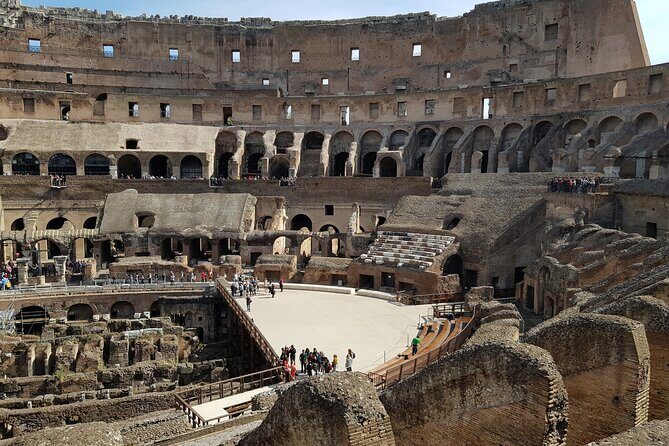
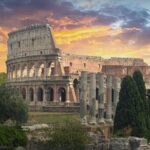
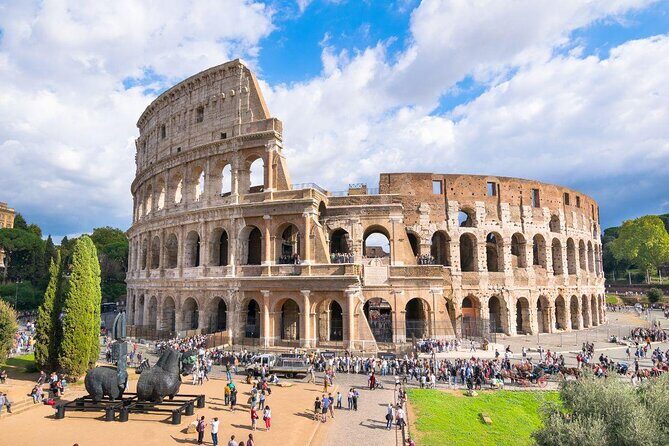
The Colosseum is the obvious reason you’re here. Still, I’ve learned the hard way that the building can feel like an isolated landmark unless you connect it to what was happening around it every day. That’s why this combo works: after the amphitheater, you walk to the Roman Forum, the center of political life and public moments, and then you finish at Palatine Hill, tied to the idea of imperial beginnings.
The other value is mental. You leave with a more connected picture: crowds watching spectacle at the Colosseum, civic decision-making in the Forum, and the older power base on Palatine. Instead of “I saw a ruin,” you get “I understand why this mattered.”
The route is also time-managed. You’re looking at about 1 hour 30 minutes at the Colosseum, then a shorter Roman Forum stop, then a focused Palatine visit. It’s long enough to learn and look, but not so long that you feel dragged from one end of Rome to another.
Other Palatine Hill tours we've reviewed
Where to meet and how the timing usually feels
This tour meets at L.go Gaetana Agnesi, 1, 00184 Roma RM, Italy and ends at Via Celio Vibenna, 2, 00184 Roma RM, Italy. That end point matters because it affects where you’ll naturally head afterward—so it’s smart to plan dinner or a next stop without assuming you’ll finish right back where you started.
Expect the Colosseum to take the majority of the time (about 1 hour 30 minutes). You’ll then get roughly 45 minutes at the Roman Forum and around 25 minutes at Palatine Hill. In plain terms: the Colosseum is your “main course,” and the other two stops are the supporting scenes that make the story click.
Also keep in mind that the meeting time can shift. If that happens, you’ll get email notice. On tour day, I’d build in extra margin so you don’t feel rushed during the pre-entry checks.
Colosseum entrance: what you get and how to use it
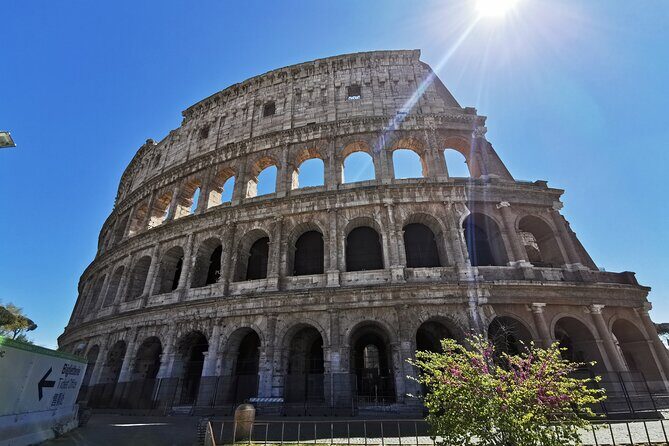
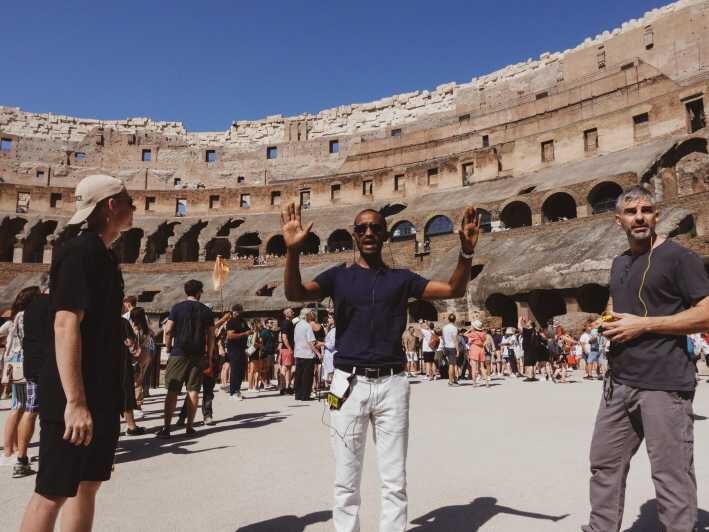
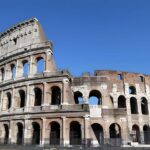
Your first major stop is the Colosseum, where the guide walks you through the monument with an emphasis on history, architecture, and the kinds of events that shaped it. If you choose the upgrade, you can include arena floor access and get more of the experience than a basic upper-level walkthrough.
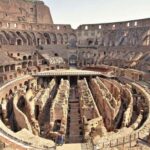
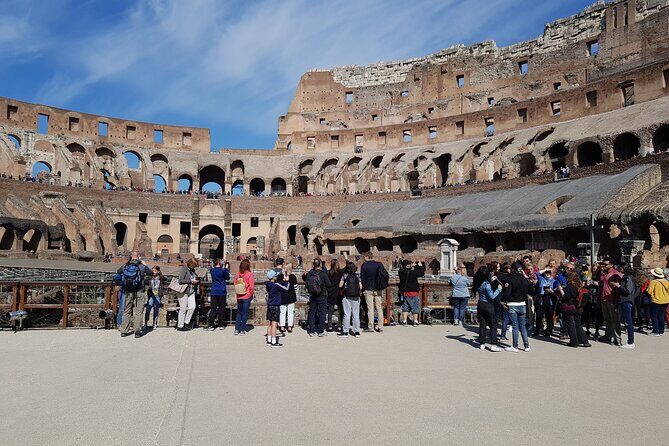
A big part of what makes this worthwhile is that the arena setting is not just scenery. Standing in or near the arena changes how the building reads. You start noticing how spaces funnel sightlines, how levels relate, and why the structure was designed for mass viewing. When you’re on the ground level where people would have stood, the scale hits faster.
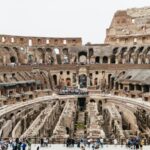
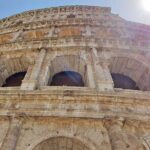
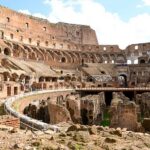
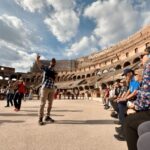
Even if you don’t pick the arena-floor option, you still get meaningful time in the 1st and 2nd rings. That’s a sweet spot for views and context: high enough to see the amphitheater layout, close enough to grasp how the crowd movement would have worked.
One practical note: Colosseum security screening happens at entry points, and during peak seasons it can take time even when your ticket is already in place. This tour’s timing doesn’t pretend you can beat that. It just helps you arrive ready for it.
The 1st and 2nd rings: getting real perspective on the arena
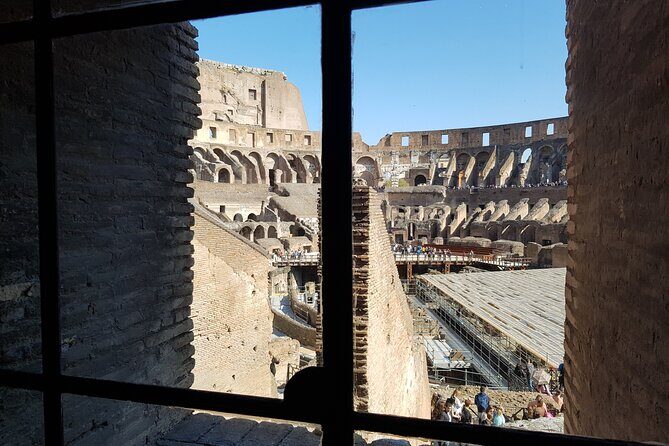
This is where I think many tours go wrong—they rush you through the most meaningful vantage points. Here, the plan is built to help you actually see what you’re looking at.
In the 1st and 2nd rings, you get a clearer understanding of the amphitheater’s layers. You can look across the arena and make sense of how sections relate to each other. You’ll also likely spend more time on “why it’s shaped this way,” not just “what year it was built,” because the rings are where geometry becomes obvious.
This is also the area where your guide’s explanations can really land. It’s easier to understand terms about architecture and events when you can connect them to sightlines and the way you’re standing. You’re not trying to visualize from a distance.
And if you did the arena-floor upgrade, returning to the rings afterward can feel like switching from “actor mode” to “architect mode.” You’ll see the building differently. The Colosseum stops being a photo stop and starts feeling like a working venue.
Roman Forum: the civic engine behind the spectacle
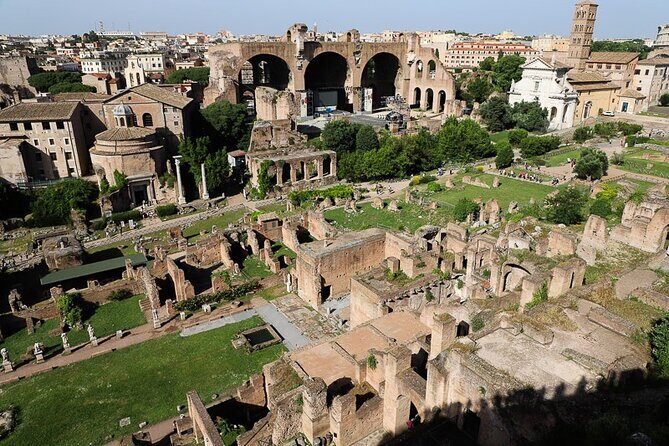
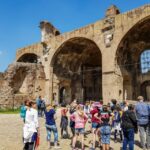
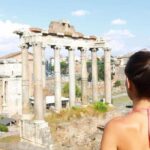
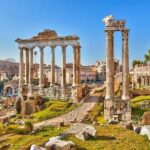
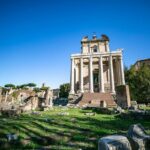
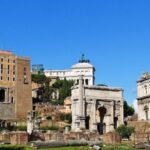
After the Colosseum, the pace shifts to the Roman Forum, the center of daily life and public power. This stop isn’t about seeing one statue and moving on. It’s about understanding how Rome ran: triumphal processions, elections, public speeches, criminal trials, and even gladiatorial matches in the broader public setting.
You’ll have about 45 minutes here, which means you need to listen closely and prioritize what your guide emphasizes. The Forum is big and easy to overconsume. In this time window, the guide can help you connect the dots faster—why this area mattered, how the spaces would have been used, and what kinds of public events you’re looking at.
The drawback to be aware of: the Forum can feel spread out. If you’re hoping for deep, slow wandering, 45 minutes may feel short. But if you want context and direction (and you like getting oriented), it’s a solid add-on that keeps the whole experience from becoming a one-note Colosseum story.
Other Colosseum Arena Floor tours bundled with the Forum
Palatine Hill in 25 minutes: what you can realistically grasp
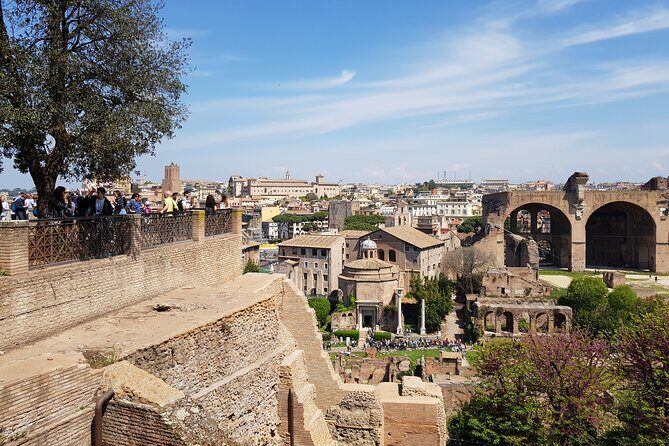
Palatine Hill is the oldest-feeling stop on this route. It’s considered the central hill of Rome and linked with the idea of the first nucleus of the Roman Empire. You’ll spend about 25 minutes there, which is enough to get a sense of why this area mattered, without pretending you can absorb every layer of archaeology in one go.
What I like about this stop is how it rounds out the day. The Colosseum shows you public spectacle. The Forum shows you public decision-making. Palatine suggests where elite power and early influence tied into the city’s larger story.
Because the time is short, you’ll do best if you treat it as a “bring it together” moment. Look for the big-picture meaning your guide points out—how Palatine fits the arc of Roman power rather than getting lost in details you can’t finish today anyway.
Guide impact: Enri and Simona’s style of explaining Rome
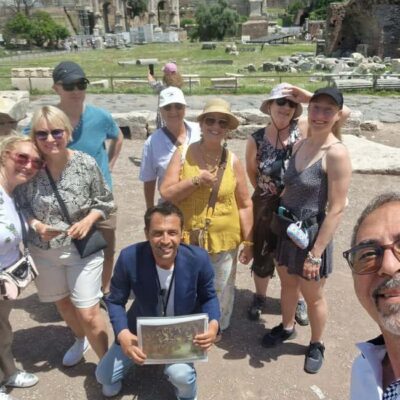
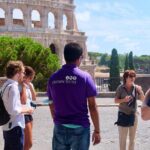
This experience is only as good as the guidance, and the standout theme from the guide experience here is passion plus clarity. One guide named Enri is praised for contagious passion for Rome’s story. That kind of enthusiasm matters because the Colosseum can otherwise feel like a textbook. When the guide gives you a living sense of the building, you actually remember what you saw.
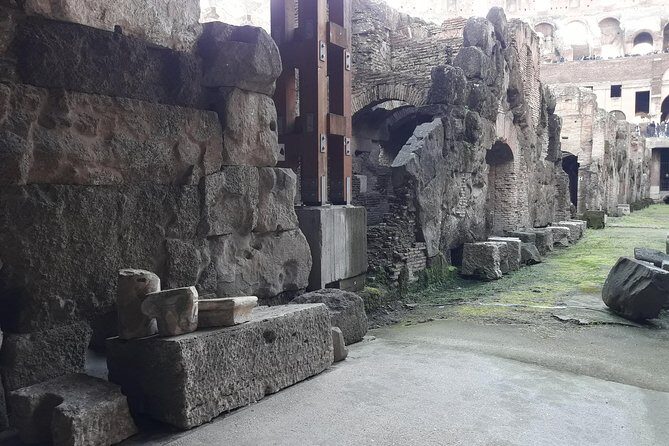
Another guide named Simona is specifically noted for making the underground portion of the Colosseum feel special, while also walking through historic galleries with care and knowledge. Even if you don’t know the details ahead of time, what you need on a Colosseum tour is help spotting what’s significant. Guides like this do that for you.
So here’s my practical takeaway for you: ask questions at the moments where your feet are planted and the view is clear. If you’re near the arena setting or within the ring areas, that’s when answers land best.
Price and what’s included: do the math with tickets
At $23.82 per person, this tour can be a strong value because the inclusions matter. The experience includes admission fees for Colosseum, Roman Forum, and Palatine Hill, plus a professional guide.
It also includes Colosseum-specific components like the Colosseum reservation fee (valued at €2 per person) and states that the Colosseum and Arena entrance ticket are valued at €24 per person. In other words, the cost isn’t just “pay for a guide.” You’re also paying for access and reserved entry support.
If you choose the arena upgrade option, the value gets even more practical. Arena-floor access is usually where tours separate into “nice views” versus “I felt like I was part of it.”
What’s not included is private transportation. That’s normal for walking-focused tours around central Rome, but it’s good to plan your own transit so you’re not stressed trying to time buses or taxis around a fixed start.
Weather, crowds, and security screening: how to stay sane
Rome moves by the rules of weather and security, and this tour acknowledges both.
The tour goes ahead unless the monument is closed by authorities for safety reasons. So if it’s rainy, plan on dealing with wet stone and damp crowds. Bring a light rain layer and wear shoes you can trust on uneven surfaces.
More importantly, there are mandatory security screenings at entry points. Peak times or seasons can bring significant wait time for security checks, and that delay is not the same thing as ticket-queue time. The smart move for you is to arrive early enough that security surprises won’t knock your pacing off.
Also bring a valid government-issued ID or passport. Your name on the booking can’t be altered, and security can refuse entry if your details don’t match. It’s not complicated, but it’s strict.
Finally, this tour says it’s designed for moderate physical fitness. If you can handle steady walking with pauses for photos and explanations, you’ll be fine.
Who this tour fits best (and who should choose another plan)
I’d book this if you want:
- a guided, structured Colosseum visit with time in the 1st and 2nd rings
- the Forum and Palatine add-ons so you leave with context
- an experience that’s private for your group, not a big anonymous cattle line
- an English guide with a professional focus on how the sites connect
I’d think twice if you want extreme depth at only one site. The Colosseum is the main event, but the Forum and Palatine are shorter by design. If your ideal Rome day is long wandering with zero structure, this might feel a bit “scheduled.”
And if you’re very sensitive to crowds, remember that central Rome sites attract peak numbers. The guide helps you manage what you can control, but you can’t wish away security screening and general foot traffic.
Should you book this Colosseum gladiator arena Forum and Palatine guided tour?
Yes—if you want the best kind of value: a guided Colosseum first, then the civic and imperial context that makes it make sense. The arena-floor upgrade option is worth considering if you can budget for it, because it changes the emotional impact of the day.
For your decision, focus on your priorities:
- If you care about understanding the sites, not just checking boxes, this route fits.
- If you want full-day freedom, pick a slower plan.
- If you want to stay practical, manage time, and get the most from a limited window, this is a solid booking.
FAQ
Is the tour offered in English?
Yes. The tour is offered in English.
How long does the experience take?
It runs about 2 to 3 hours total, with scheduled time at the Colosseum, Roman Forum, and Palatine Hill.
Where do I meet and where does it end?
You meet at L.go Gaetana Agnesi, 1, 00184 Roma RM, Italy and the tour ends at Via Celio Vibenna, 2, 00184 Roma RM, Italy.
What tickets are included?
Admission fees are included for the Colosseum, Roman Forum, and Palatine Hill. If you select an option that includes the arena floor, then the arena-related admission is included as well.
Do I need to bring identification?
Yes. Each participant must present a valid government-issued ID or passport, and names provided during booking can’t be altered.
Will weather stop the tour?
The tour normally proceeds regardless of weather conditions unless authorities close the monument for safety reasons.
How soon will I receive confirmation?
Confirmation will be received at the time of booking, unless you book within 8 hours of travel. In that case, confirmation is received as soon as possible, subject to availability.