REVIEW · ROME
Self-Guided Audio Tour – The gods of the Palatine
Book on Viator →Operated by SOUNDWALKRS · Bookable on Viator
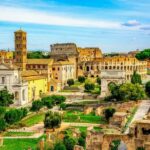
The Palatine feels like myth made real. This self-guided audio tour strings together offline chapters and a myth-focused route through Rome’s oldest hill, where Romulus and later emperors shaped the city. My favorite part is how the stories stay practical as you walk—then the one thing to watch is that admission is not included, and some entry situations may involve photo ID rules.
You’re in for about 40 minutes of walking at your pace, using a mobile ticket plus offline content. If you want a low-cost way to turn stones into stories, this hits a good sweet spot: short enough for a tight day, detailed enough to feel like you learned something.
One more expectation check: you’ll be working on your own with the audio, so you need a charged phone and patience with finding the right starting spot. The Palatine site is spread out, and directions matter.
In This Review
- Key highlights you’ll care about
- Getting oriented at the Domus Augustana area
- Price and what your $10 buys (and what it doesn’t)
- How the self-guided audio actually feels in practice
- Stop: Circus Maximus from the Palatine world
- Palace of Domitian (Domus Flavia): power you can picture
- The Titus triumphal arch: propaganda lessons in stone
- Romulus and the legendary founding site: myth with a location
- Augustus’ former home and the Domus Augustana feeling
- Timing, pacing, and how to place this in your Rome day
- Ticketing gotchas: admissions and photo ID
- Who this Palatine audio tour is for
- Should you book it? The simple call
- FAQ
- How long is the self-guided audio tour?
- Is the admission ticket included?
- What do I need to bring with me?
- Where does the tour start and end?
- Is this a guided tour?
- Do I need a photo ID?
Key highlights you’ll care about
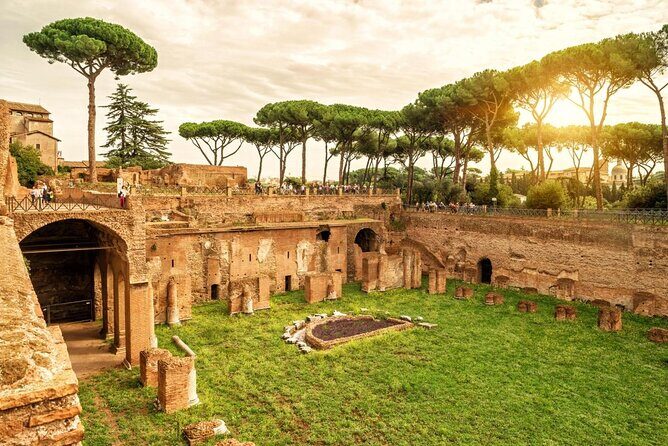
- Offline chapters with maps and tips so you’re not stuck when cell service fades
- A quick, 40-minute route that works even if your Rome day is already packed
- Domitian’s Domus Flavia and imperial spaces that explain how power looked up close
- Titus’ triumphal arch and Roman propaganda in stone—useful context for what you’re seeing
- Romulus and the founding legends placed where you can still visualize the origin story
Getting oriented at the Domus Augustana area
This tour is built around the Palatine Hill’s ruins and viewpoints, so the first win is knowing where to start. Your meeting point is in the area of Domus Tiberiana / Orti Farnesiani sul Palatino, on Via della Salara Vecchia 5/6. The end point is on the Palatine Hill / Parco archeologico del Colosseo side near Via di S. Gregorio 30, and you’re told to locate yourself in front of the Domus Augustana.
That matters because Palatine can feel like a maze, even when you’re standing outside it. The audio tour only works well if you begin close to the intended listening area. Before you start, I recommend you do two things: (1) open your map and confirm you’re at the Domus Augustana side, and (2) take a quick look around for signage or ruin markers nearby. Don’t rely on nearby passersby if they’re pointing vaguely. You want the correct starting zone, not a general neighborhood.
Also keep in mind that the tour runs daily (listed opening hours cover the full day across the range), so it’s easier to fit into your schedule than timed guided tours. Still, Rome ruins are busy, so plan to be ready to start on time.
Other Palatine Hill tours we've reviewed
Price and what your $10 buys (and what it doesn’t)

At $10 per person, this is priced like a smart add-on, not a full “day activity.” And that’s exactly how it works best: you pay for the audio experience and the offline chapters with maps and tips—not for entry into the archaeological sites.
So here’s the key value question: are you already planning to visit the Palatine anyway? If yes, this audio tour can turn your visit into a guided-style experience without the cost of a live guide. If no, then the $10 is only part of the picture. Admission tickets are not included, and you’ll need to arrange them separately.
One practical caution: one common frustration at major Roman sites is that ticketing rules can require a photo ID for certain entry or ticketing steps. This tour itself does not claim control over those venue rules—those are set by the site. But as a traveler, you should treat it as a “bring ID just in case” situation so your day doesn’t stall at the entrance.
How the self-guided audio actually feels in practice

This is a self-guided setup from SOUNDWALKRS. You get offline chapters, plus maps and tips to explore the area. You’re looking at roughly 40 minutes total, which is a nice length for a “story walk” without burning your whole afternoon.
The good: offline content means you’re not hostage to signal quality. The Palatine is a classic place where phone coverage can be spotty as you move among structures and terraces. Offline chapters help you keep listening even when your data bar is doing nothing.
The not-so-good: you’ll need your own basics. Smartphone and headsets are not included. If you don’t want to annoy other people (or you just want clearer audio), bring headphones. And bring a charged phone. You’re not just navigating—you’re also playing an audio sequence.
Also, this activity is private to your group. That’s not about comfort luxury; it’s about the experience not turning into a free-for-all. You can move at your pace and avoid getting dragged along or separated from your own audio path.
Stop: Circus Maximus from the Palatine world
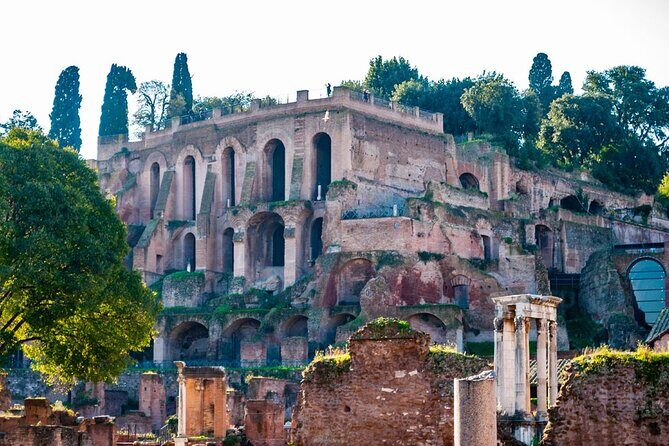
One of the tour’s clever moves is starting you toward Circus Maximus, a major Ancient Rome arena used for chariot racing. The audio frames it as being created under Lucio Tarquinio Prisco, the fifth king of Rome (the name you’ll hear here is tied to that royal origin story).
From the Palatine, you get a useful perspective shift. You’re on one of the city’s high points, but the Circus Maximus story is about spectacle below. Listening here helps you connect the hill’s elite life to the crowd energy—emperor power, yes, but also the public theater of Rome.
What to watch for: Circus Maximus can be a lot of “imagination work” if you’ve already seen modern Rome first. The payoff is that your audio narration gives you the mental picture of scale and purpose, so you can understand why the Romans invested in mass entertainment as early as they did.
Palace of Domitian (Domus Flavia): power you can picture
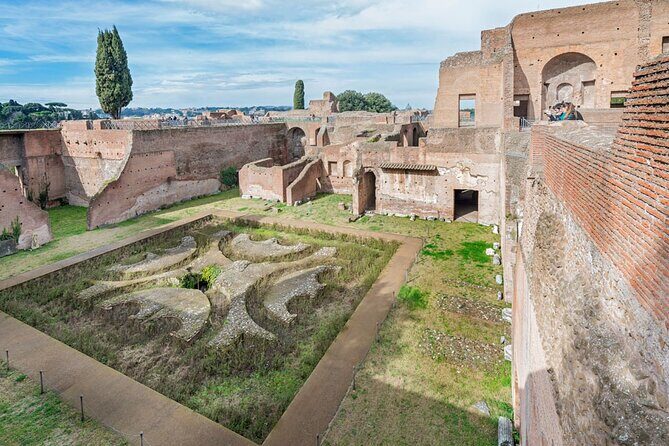
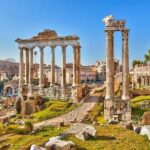
Next up is the Palace of Domitian, normally known as Domus Flavia, part of the grand residential complex on the Palatine Hill. This stop matters because Domitian’s name is tied to how the Roman Empire presented rule. Even in ruins, the Domus Flavia area helps explain that imperial residences weren’t only living spaces—they were political statements.
In your head, try to connect three things as you listen:
- Who lived here,
- What kinds of ceremonies or public-facing moments might have happened nearby, and
- How architecture can funnel movement and attention.
The Domitian palace stop is great if you want more than random “cool ruins.” It pushes you toward understanding how Romans used space. The possible drawback is that Palatine ruins can look repetitive if you’re not sure what you’re looking at. That’s exactly where the audio helps: it gives meaning to what would otherwise feel like walls and foundations.
Other audio-guide tours of the Forum & Ancient Rome
The Titus triumphal arch: propaganda lessons in stone
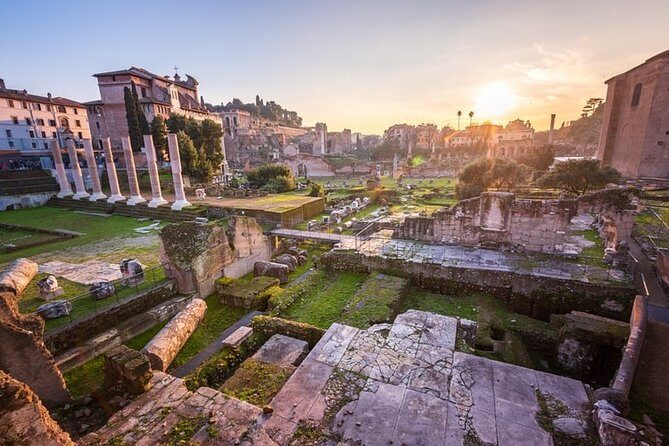
The tour then points you toward a triumphal arch with inscriptions and sculptures honoring the military victories of Emperor Titus. This is one of those Roman details that’s easy to miss if you just walk past it like a landmark.
What makes it worthwhile is the framing. A triumphal arch is not neutral decoration. It’s a message built in stone: victories get broadcast, names get remembered, and the empire’s story gets carved into the landscape.
As you listen, you’ll likely pick up context on why Titus’ image and titles matter here. If you’re curious about how Rome used art to create authority, this stop delivers. Just keep your expectations realistic: this is still a ruin, so you may not see every “perfect” surface up close. Instead, focus on the shapes, the placement, and what the narration tells you to look for.
Romulus and the legendary founding site: myth with a location
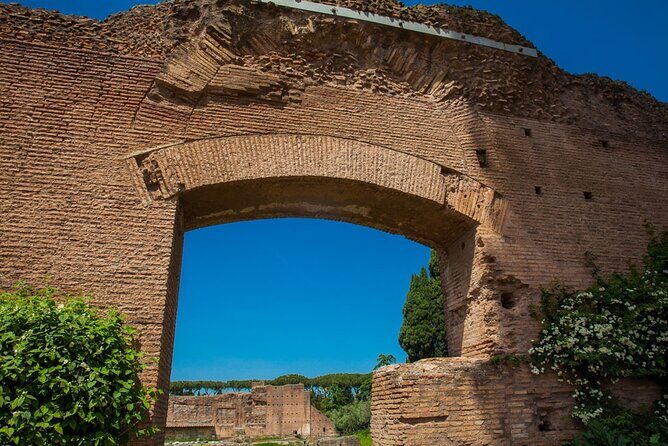
Then you reach the legendary founding site of the city—the part that connects the whole Palatine Hill story to Rome’s origin myth. Hearing about Romulus and the earliest formation of Rome is one thing. Hearing it while you stand near places associated with that beginning makes it different.
This is where the tour title makes sense in spirit: not because you’ll necessarily see gods on every wall, but because Roman identity is built on gods, legends, and the idea that the city has a destiny. The audio tour keeps reminding you that these weren’t only fairy tales to the Romans. They were an explanation for why Rome mattered.
Possible consideration: if you prefer strictly chronological history (date, reign, event, repeat), myth-heavy storytelling can feel a bit “soft.” My advice is to treat it as interpretive glue. You’ll still learn concrete historical connections because the audio ties the origin legends to who ruled later and how the empire wanted people to understand the past.
Augustus’ former home and the Domus Augustana feeling
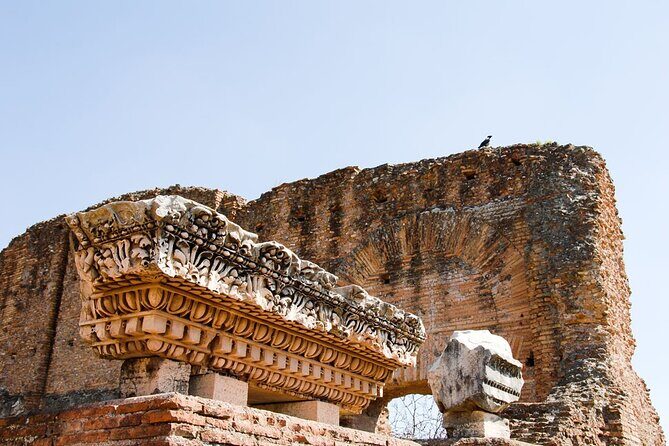
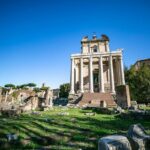
The route closes by returning to the imperial core: the former home of Augustus, including public areas and the central courtyard of the ancient palace complex known as the Domus Augustana.
This stop is one of the best ways to understand Augustus, because it’s not only about battles and decrees. It’s about the physical setting of power. Courtyards and public areas tell you how people moved, where encounters could happen, and how everyday space supported political messaging.
As you listen, try not to picture the palace as a museum display. Picture it as a working place. Augustus was building a new political identity after civil conflict, and the palace’s design and function helped reinforce that story.
One practical note: because this is a ruin landscape, you might want to slow down slightly here. If you rush, you can miss how the audio describes the spaces. Let the footsteps and listening sync up so you’re not just collecting information—you’re building a mental map.
Timing, pacing, and how to place this in your Rome day
A 40-minute experience is ideal for Rome’s “between things” time. You can pair it with nearby sightseeing without needing to plan your entire day around it. If you’re doing a big-ticket site later (Colosseum area, for example), this audio walk helps you get a Palatine context first.
How to pace it:
- Start on time so the audio flow matches your movement.
- Take one short pause if you need to reset your phone or reorient.
- If it’s hot, take advantage of shade where you find it, but don’t stop mid-story for long. The audio is designed around an order of locations.
Also consider crowd conditions. In peak hours, people cluster around viewing points. If you’re using headphones, it’s easier to keep your focus while still giving space to others.
Ticketing gotchas: admissions and photo ID
Here’s the practical reality check: this audio tour does not include entry tickets. That means your overall cost could be higher than the $10 if you still need to buy site admission.
And here’s the other real-world issue: some entry processes at major venues may require photo ID. One key lesson is simple—bring your passport or another photo ID with you, even if you think it’s unnecessary. It’s a small step that can prevent a big hassle at the entrance.
To reduce stress, also plan for time buffers. If your admission line is longer than expected, you’ll still want to start the audio with enough time to complete it calmly.
Who this Palatine audio tour is for
This experience is a great match if you want:
- A short, affordable way to understand the Palatine without a formal guided tour
- An audio route that helps you identify what you’re seeing (instead of guessing)
- Offline content for Roman ruins where signal may be unreliable
It also fits families and first-timers who want a structured walk, as long as kids can handle listening time. It’s not ideal if you want a live guide answering questions. This is self-guided. You’re the conductor.
It can work well for repeat visitors too. If you’ve been to the Palatine before, the audio approach often adds meaning to the same physical spaces by changing the order in which you experience them.
Should you book it? The simple call
Book it if you’re already planning to visit the Palatine Hill and you want a smarter, more coherent walk for $10. The combination of offline chapters, maps, and tips makes it feel like guided history without the guided price.
Skip it (or at least think twice) if you haven’t planned for separate admission, or if you’re not comfortable managing ticketing rules on your own. The tour also asks you to bring a smartphone and ideally headphones, so it’s not a hands-off activity.
If you’re the kind of person who likes to turn a walk into a story—Circus Maximus energy, Domitian power, Titus propaganda, and Augustus’ palace spaces—you’ll likely enjoy how smoothly this route ties the hill together.
FAQ
How long is the self-guided audio tour?
It takes about 40 minutes (approx.).
Is the admission ticket included?
No. The admission ticket is not included. You’ll need to buy entry separately.
What do I need to bring with me?
You’ll need your own smartphone and ideally headsets. The tour provides offline chapters, but it does not include those devices.
Where does the tour start and end?
It starts near Domus Tiberiana / Orti Farnesiani sul Palatino (Via della Salara Vecchia 5/6). You should locate yourself in front of the Domus Augustana. It ends at Palatine Hill / Parco archeologico del Colosseo (Via di S. Gregorio 30).
Is this a guided tour?
No, it’s self-guided. You use the audio on your mobile device at your own pace.
Do I need a photo ID?
The tour ticket does not control entry rules at the venue. Some visitors have reported needing photo ID when purchasing/using entry. It’s smart to bring a photo ID to avoid problems at the site entrance.