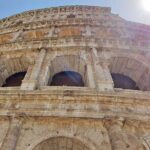
Three hours in Rome, with the hard parts handled. This timed-entry route strings together the Colosseum, Roman Forum, and Palatine Hill with smart stops that help you read the site instead of just walking through it.
I especially like that you get timed admission where it counts, and the guide (when you book guided) uses headsets so you don’t miss the story while you’re moving.
One thing to plan for: you’ll do lots of walking and standing on uneven ground, plus several staircases—this is not a sit-down stroll.
In This Review
- Key Things That Make This Tour Worth It
- Timed-Entry That Actually Changes Your Day
- Arch of Constantine to the Colosseum: The Perfect Orientation Setup
- Inside the Colosseum: How 30 Minutes Can Be Enough
- Roman Forum to Via Sacra: Walking Rome’s Power Center
- Imperial Streets and Stage-Set Landmarks You Can Actually Place
- Arches and Repurposed Rome: Titus, Antoninus, and Faustina
- Palatine Hill Finish: Panoramas and the Circus Maximus View
- Optional Arena Floor Access: Who Should Pay the Extra
- What $59.28 Buys You (And Why It’s Not Just a Ticket)
- Meeting Point, Terrain, and Comfort Tips That Matter
- Guide Names You Might Be Lucky Enough to Get
- Should You Book This Colosseum, Forum & Palatine Tour?
- FAQ
- What is included in the timed-entry tickets?
- How long does the tour last?
- Where does the tour start and where does it end?
- Is the Arena Floor option included automatically?
- Are headsets provided?
- Is there an audioguide option instead of a live guide?
- Do I need to download an app before I go?
- Can I bring luggage or large bags into the venues?
- What if the Colosseum closes due to weather?
- What is the cancellation window for a full refund?
Key Things That Make This Tour Worth It
- Timed entry to the Colosseum, plus Forum & Palatine so your morning stays efficient instead of stuck in bottlenecks.
- Optional Arena Floor access if you want the extra wow of standing where the action once happened.
- Small-group feel (max 25) helps you move with fewer slowdowns than the biggest buses.
- A route with named landmarks like Via Sacra and Via dei Fori Imperiali, which makes the ruins easier to connect.
- Headsets for clearer guidance on guided options, so you can keep your eyes on the ruins.
- A Palatine Hill finish that gives you panoramic payoff and an easy visual sense of Rome’s scale.
Timed-Entry That Actually Changes Your Day
The Colosseum complex can swallow time fast—lines, ticket checks, and crowd friction. This tour’s biggest practical win is that it’s built around timed entry to the Colosseum, then keeps you moving through the Forum and Palatine area without the same level of aimless waiting.
That matters because you’re on a schedule: the tour runs about 3 hours. You’ll get a tightly planned route with multiple short stops, so you leave feeling like you saw the right pieces, not just the loudest photo spots.
Other Forum, Palatine & Colosseum combo tours we've reviewed
Arch of Constantine to the Colosseum: The Perfect Orientation Setup
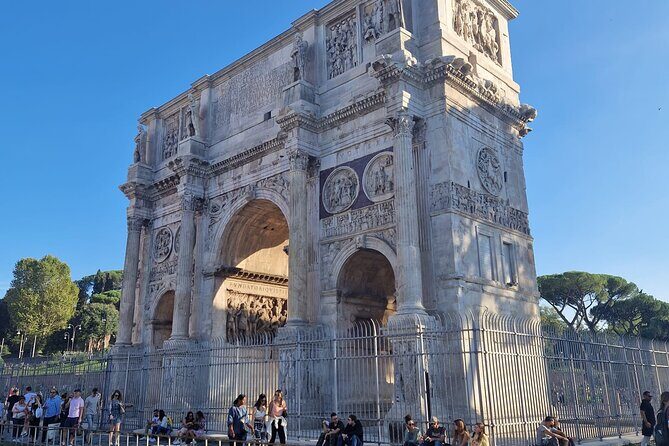
Your first stop is the Arch of Constantine (Arco di Constantino), a triumphal arch honoring Emperor Constantine’s victory at the Battle of Milvian Bridge. It sits between the Colosseum and Palatine Hill, so it’s a natural “map marker” for how the ruins relate to each other.
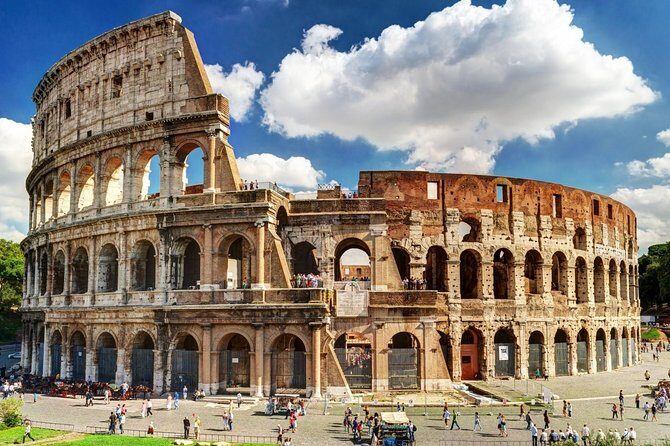
From there, the tour pivots to the Colosseum itself. What I like about this sequence is that you’re not thrown into the giant amphitheater bowl first. You get a quick frame of reference, then you step into the place where the story becomes visible: arches, streets, and hills that all worked together to stage power in ancient Rome.
Inside the Colosseum: How 30 Minutes Can Be Enough
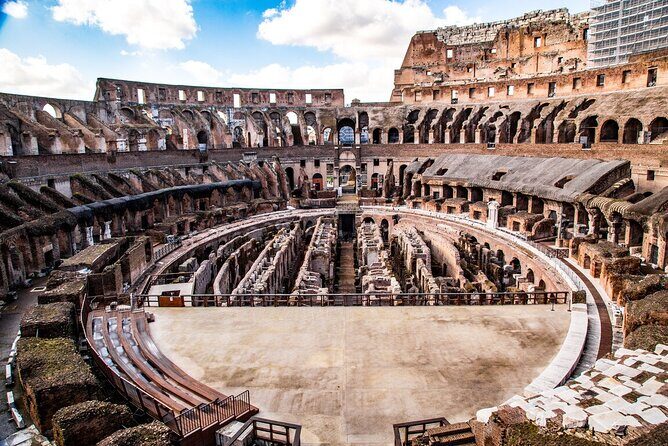
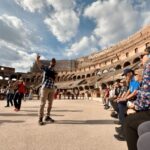
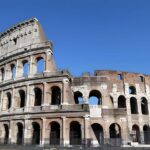
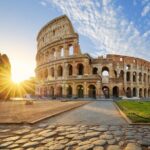
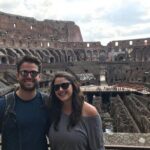
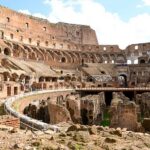
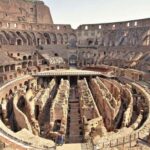
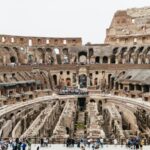
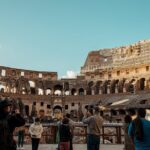
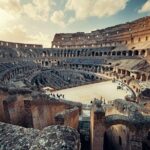
The Colosseum stop is about 30 minutes, and you’ll be exploring inside the arena/entry areas as your guide explains what you’re looking at. Even if you’ve seen it in photos a hundred times, the scale hits differently in person—the rows of stone seating, the geometry of the space, and the sense of a designed crowd-viewing experience.
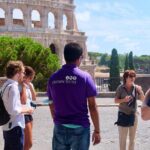
Also, if you choose guided, the headsets are a real help here. The Colosseum is loud with people. Headsets keep the narration clear while you look around, instead of trying to hear over the crowd.
If you’re considering a Colosseum “wander alone” approach, this is where a guided or structured experience pays off. You don’t just see the structure; you learn what parts mattered and how the site functioned.
Roman Forum to Via Sacra: Walking Rome’s Power Center
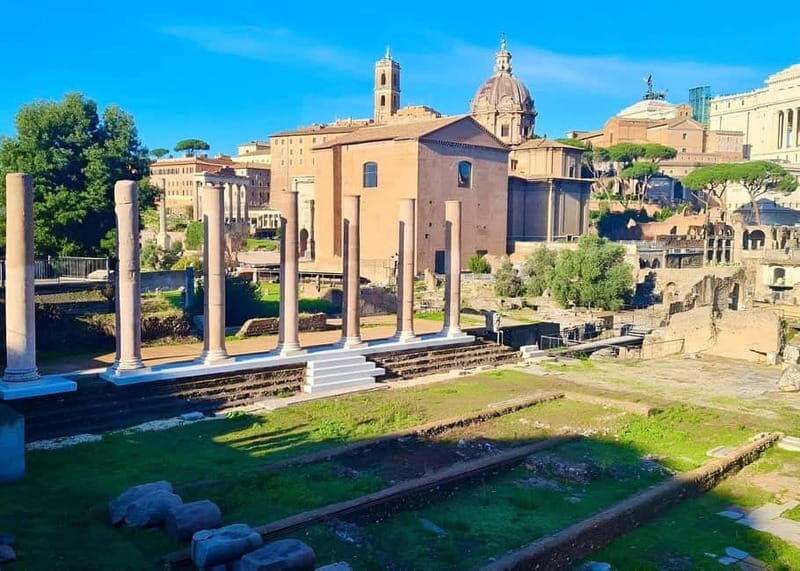
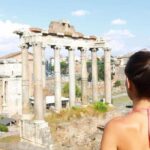
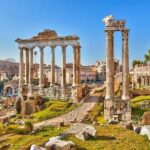
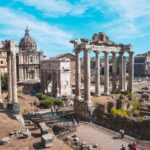
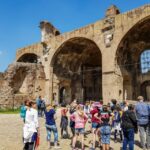
After the Colosseum, the tour shifts to the Roman Forum, around 20 minutes of time. This is the emotional center of “ancient Rome” for a lot of people: it’s where government happened, where public life concentrated, and where you still feel the city’s rhythm through scattered ruins.
Then comes Via Sacra, the famous main street that ran through the Forum area toward the Colosseum. It was part of the route for Roman Triumphs—ceremonial processions that turned politics into spectacle. That context changes how you read the street: you start noticing how the path would have looked during a big civic moment, not just what stones are left behind.
A quick but useful bonus stop is Piazza del Colosseo, named after the Colosseum and framed by nearby ancient features like the Meta Sudans and the Colossal statue of Nero area. These details help you connect the Forum/Colosseum story to what you see in the surrounding blocks today.
Imperial Streets and Stage-Set Landmarks You Can Actually Place
Between the Forum and Palatine Hill, you’ll hit a chain of stops that turn “random ruins” into a connected walk.
- Via dei Fori Imperiali gives you a scenic boulevard view toward the Colosseum, lined with monumental ruins tied to the forums of major Roman rulers (Caesar, Augustus, Nerva, and Trajan).
- I Rostri is a smaller, easy-to-miss piece: remains of the platform used for public orations in republican and imperial times. It’s a great reminder that Rome wasn’t only about buildings; it was also about speeches, persuasion, and public debate.
- Temple of Venus and Roma (Tempio di Venere di Roma) sits on the Velian Hill and is described as one of the largest temples in Ancient Rome, dedicated to Venus Felix and Roma Aeterna. Standing near it (even briefly) gives you a stronger sense of how religion and identity were linked to the city.
This section is short at each stop—often around 10 minutes—so the guide’s job is to point your eyes in the right direction fast. If your guide style matches your tastes, this part can feel like a “Rome primer” you’ll remember later.
Other Palatine Hill tours we've reviewed
Arches and Repurposed Rome: Titus, Antoninus, and Faustina
The tour also includes two triumphal/monumental arch stops that help you read Roman messaging in stone.
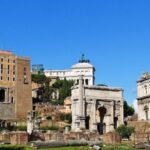
Arco di Tito (Arch of Titus) is on the northern slopes of Palatine Hill, a single-arch monument tied to Emperor Titus’s victories, including the Siege of Jerusalem. It’s the kind of structure that’s easier to understand when you’re already thinking in “power and propaganda” terms.
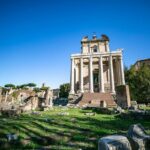
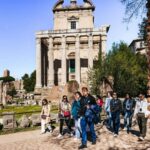
Then you’ll see Tempio di Antonino e Faustina, an ancient temple that later became the church of San Lorenzo in Miranda. This repurposing theme comes up a lot in Rome, and it’s a smart inclusion: it shows how old Rome didn’t just disappear—it got reused, rebuilt, and folded into later eras.
Palatine Hill Finish: Panoramas and the Circus Maximus View
The end stretch centers on Palatine Hill, about 20 minutes. Palatine is tied to the city’s foundation story and to the imperial residences—so it feels like you’re standing in the “where power lived” zone. Even in a short time, you should get some of the best big-sky Rome vibes, plus viewpoints that help you see why the hills mattered.
The tour includes a final glimpse of Circus Maximus—not entry, just a view from the Palatine Hill area. It’s only a couple minutes, but it’s a memorable mental image: the space where Romans cheered for charioteers, with the scale that makes you picture the noise and movement.
Optional Arena Floor Access: Who Should Pay the Extra
If you book the Arena Floor Access option, you’ll get access beyond the standard route. The value here is about imagination: standing on the arena floor turns the Colosseum from a “big historic photo” into a stage you can mentally replay.
It’s especially worth it if you enjoy immersive experiences or you like to “stand where the story happened.” If you’re the type who already feels satisfied by views from tiers and corridors, you might decide that your money is better spent on other Rome experiences that fit your schedule.
Bottom line: the standard timed-entry experience is already strong. The arena upgrade is for people who want the extra step.
What $59.28 Buys You (And Why It’s Not Just a Ticket)
At $59.28 per person for roughly 3 hours, the price is doing more than covering entry. Your timed admission is a key part of it, but the rest is for the services that make the day run smoother: the timed reservation value, any reservation fee, and the guide coordination plus audio support (depending on which option you select).
Also pay attention to what you choose at booking:
- Guided options include headsets for clearer audio.
- Audioguide/app options are a different product experience. You’ll need a smartphone and earphones, and you’ll download via a link sent ahead of time.
That distinction matters because a few unhappy moments in the past have come from people arriving expecting a live guide when their booking was for an app experience. If you want a guide’s narration, double-check your voucher.
Meeting Point, Terrain, and Comfort Tips That Matter
This tour starts at the Arch of Constantine area (with the meeting address listed near Piazza del Colosseo) and ends at Palatine Hill, Via di S. Gregorio 30. That end point is handy: you finish in the best location for views, and you can keep exploring without crossing the city back toward your hotel.
Expect extended standing and uneven ground. The route includes several staircases, so comfortable shoes aren’t optional. Also, the Colosseum and surrounding areas are outdoors—weather can be a deciding factor.
One practical comfort point: multiple guides on this kind of route are good at adjusting pacing with short shaded stops. You’ll feel that difference on hot days.
Guide Names You Might Be Lucky Enough to Get
A big part of what makes this tour click is the guide’s delivery—clear explanations, quick context, and the ability to keep the group moving.
From past experiences, guides like Laura, Patrizia, Alberto, Donatella, and Sylvia have been specifically praised for being engaging and for keeping tours running smoothly even when conditions get tough. If your guide uses headsets well and speaks clearly, the packed itinerary feels manageable instead of rushed.
Should You Book This Colosseum, Forum & Palatine Tour?
Book it if you want:
- A structured, timed plan that reduces waiting and helps you connect the ruins
- A route that covers the big Roman hits in about three hours
- The option to upgrade to the arena floor for that extra wow
Skip or consider a different style if:
- You know you don’t handle lots of standing, uneven ground, and stairs well
- You’re expecting something fully flexible and unstructured (this is designed to be tight and efficient)
If you want a “best of this area” plan that’s realistic for one day in Rome, this is a strong choice.
FAQ
What is included in the timed-entry tickets?
Timed entry is included for the Colosseum plus the Roman Forum and Palatine Hill. Arena floor access is included only if you select that option at booking.
How long does the tour last?
The duration is about 3 hours (approx.).
Where does the tour start and where does it end?
The tour starts near the Arch of Constantine area and ends at Palatine Hill (Via di S. Gregorio 30, 00186 Roma RM). The tour ends around Palatine Hill.
Is the Arena Floor option included automatically?
No. Arena Floor access is only included when you choose the arena option during booking.
Are headsets provided?
Headsets are included for guided tour options to help you hear the guide clearly.
Is there an audioguide option instead of a live guide?
Yes. Depending on the option you book, you may receive an audioguide app (with a download link provided ahead of time) rather than a live guided format.
Do I need to download an app before I go?
If you booked the audioguide option, you’ll receive a link one day prior to download the app. If you chose an option with an access code sent 24 hours before, you’ll receive the code then. The app requires a smartphone and earphones.
Can I bring luggage or large bags into the venues?
No. It’s not possible to enter the venues on this tour with luggage or large bags.
What if the Colosseum closes due to weather?
If the Colosseum decides to close unexpectedly due to inclement weather, you’ll be offered a change of date or a full refund.
What is the cancellation window for a full refund?
You can cancel up to 3 days in advance for a full refund. If you cancel less than 3 days before the experience starts, the amount paid is not refunded.