REVIEW · ROME
From Gladiators to Emperors: Colosseum & Ancient Rome Guided Tour
Book on Viator →Operated by Italy Pass tours · Bookable on Viator
Three stops, one ancient Rome story. If you have limited time, this guided route strings together the Colosseum and the Roman Forum with admission handled for you, so you spend less effort in ticket lines and more energy looking at the real stone and layout of the place.
I love that you get an official local guide to turn the ruins into a map you can follow, and the included headset helps you keep up even when you’re moving through crowds. One big consideration: entry at the Colosseum and Roman Forum is strict about names and ID matching your booking, so check that before you show up.
In This Review
- Key things to know before you go
- How this 3-hour route fits first-timers and time-crunches
- Entering the Colosseum: what a guide helps you notice
- Roman Forum in 45 minutes: turning ruins into a city map
- Palatine Hill and the imperial viewpoint: myths, palaces, and views
- Price and value: is $62.48 a good deal?
- Practical must-dos that can make or break the visit
- Should you book this Colosseum and Ancient Rome guided tour?
- FAQ
- What’s included in the tour price?
- How long is the guided tour?
- Where do I meet the tour?
- Is this tour offered in English?
- Do I need to bring my passport or ID?
- Are entrance tickets included for all three locations?
- How big is the group?
- What’s the cancellation policy?
- Are service animals allowed?
Key things to know before you go
- Tickets + reservation fee are included, which cuts the hassle for a first (or fast) Rome visit.
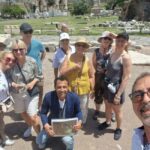
- Small group size (max 20) makes it easier to stay with your guide.
- You’ll cover three UNESCO sites in about 3 hours: Colosseum, Roman Forum, Palatine Hill.
- Headsets are provided, which is a lifesaver in noisy entry areas.
- The pace is efficient: you won’t do deep wandering, but you’ll see the right highlights.
How this 3-hour route fits first-timers and time-crunches
This tour is built for the “I want to hit the classics without fuss” traveler. You’re in Rome, you’re likely jet-lagged, and you still want to understand what you’re seeing. The structure does that well: timed entry for the biggest draw, then two more stops that were literally the political and personal core of ancient Rome.
What makes it work is the sequence. You start at the Colosseum, then you walk into the Roman Forum, then you look back over everything from Palatine Hill. It’s the same city, but the viewpoint changes. That helps your brain connect “arena” to “government center” to “imperial living” without you doing homework on a street corner.
The short duration is both a strength and a limitation. It’s great for getting your bearings fast. It also means you’ll have to accept that you won’t linger for long-photo sessions in every corner. If you love slow travel and long museum-style time, you might prefer separate tickets for a do-it-yourself day.
Other Ancient Rome tours we've reviewed

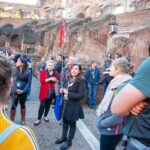
Entering the Colosseum: what a guide helps you notice
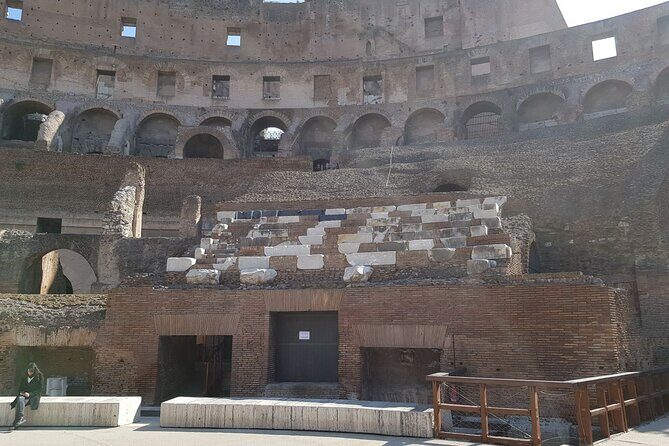
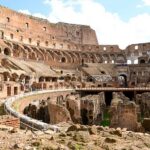
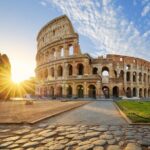
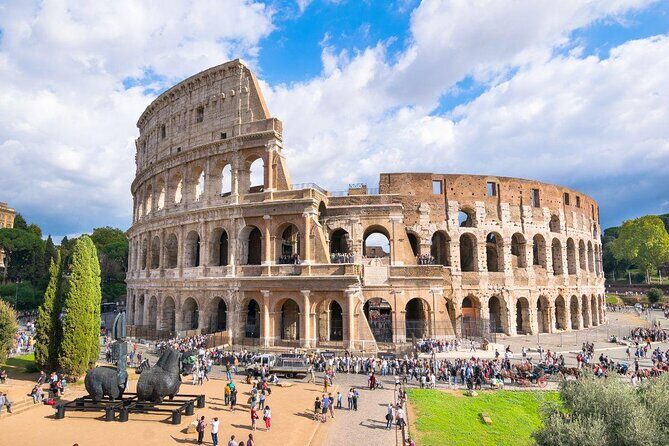
You spend about 1 hour at the Colosseum, with the admission ticket included and a reservation fee built into the price. That matters because this site is famous for timed access and controlled entry. With a guide, you’re not stuck figuring out where to stand, what line is for your ticket, and how to move when the group is called.
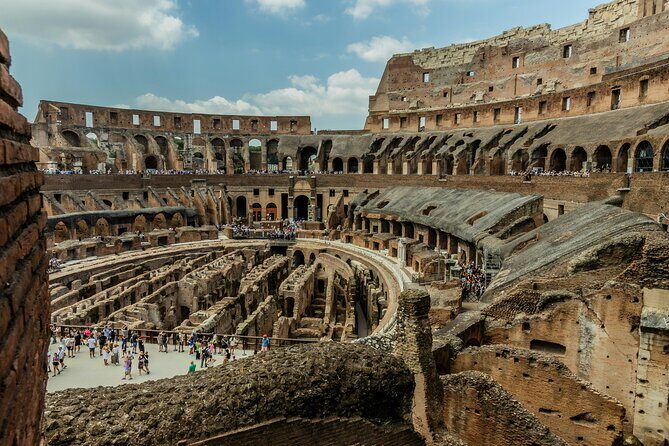
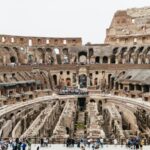
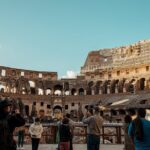
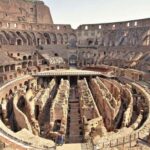
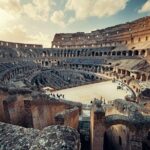
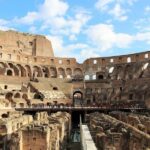
Inside, the Colosseum is more than an iconic photo backdrop. Your guide’s job is to give you a mental model for how an amphitheater worked and what it meant socially in ancient Rome. The key value here is learning what to look for: the scale of the structure, the sense of layered seating, and how the building functioned as a stage for public spectacle.
Where I’d focus my attention (especially on a guided hour):
- Look at the arena space first, then glance up and connect how the crowd experience would have felt.
- Keep an eye on the major architectural lines your guide points out—ruins can feel random if you’re not given a framework.
- Ask one question early. In one hour, that payoff can last the whole visit.
Practical note: the Colosseum entry is tied to your identity. You must present valid passport or ID matching the name on your booking, and you need the correct full names for every traveler listed on the voucher. If anything doesn’t match, access can be denied, and that’s the kind of problem you want to avoid before it starts.
Roman Forum in 45 minutes: turning ruins into a city map
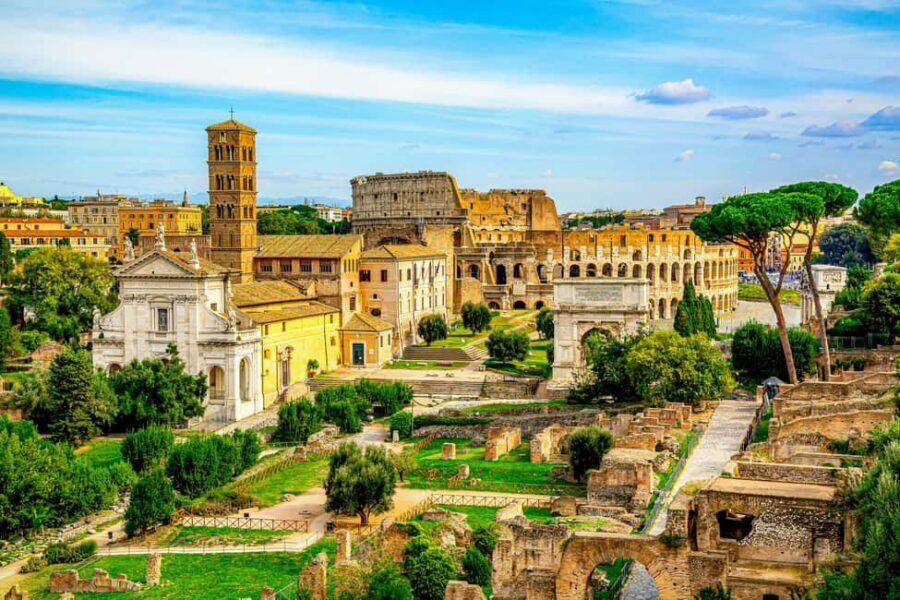
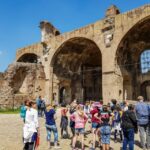
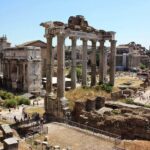
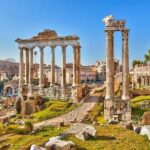
Next comes the Roman Forum for about 45 minutes, also with ticket access included. If the Colosseum is the drama, the Forum is the machinery—politics, religion, speeches, elections, and everyday public life that shaped Rome’s decisions.
This stop is special because the Forum wasn’t just one thing. It evolved over time. At first, it functioned as a marketplace, then it became the central public space for government and ceremonial life. In a short guided visit, the biggest win is that your guide helps you read the “where” behind the “what.” Without that, the ruins can blur together fast.
Here are some of the major landmarks you’ll hear about during the visit:
- Curia (Senate House)
- Temple of Saturn
- Temple of Vesta
- Basilica Julia
- Rostra, the platform used for public speeches
- Arch of Septimius Severus
Also, remember the Forum was not isolated. It was active public space: speeches, elections, religious events, and celebrations. Your guide can help you visualize the flow of crowds and authority through the layout.
The drawback of a 45-minute Forum stop: you won’t be able to “slow-read” every structure. If you’re hoping for a solo wander among columns and plaques, this is more of a guided orientation than a self-paced archaeology day. Still, for the time you have, it’s a smart use of minutes.
Palatine Hill and the imperial viewpoint: myths, palaces, and views
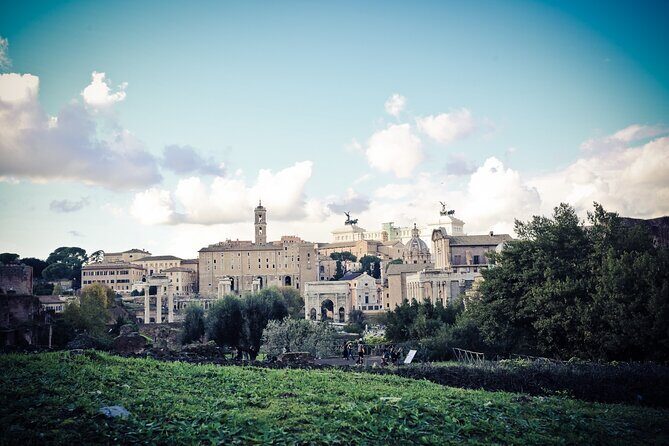
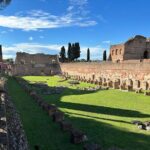
You finish at Palatine Hill for about 45 minutes. This hill sits roughly 40 meters above the Roman Forum, so you get an elevated perspective that’s hard to replicate with a solo visit. It’s also one of the oldest parts of Rome—plus it’s tied to the origin story of the city.
Your guide will connect Palatine Hill to Roman mythology, including the idea that Romulus founded Rome there in 753 BCE. Then the visit shifts from legend to archaeology. Palatine Hill contains major remains, including the imperial palaces, such as the House of Augustus and the House of Livia.
What makes this stop feel worthwhile even in a short time:
- You’re not just looking at ruins, you’re looking down at the Forum and understanding how power and daily life sat together.
- Palatine gives you a sense of scale—how the elite spaces dominated the view.
- The panoramic angles help you translate “ruins” into a real geographic story.
If you’re taking photos, this is often the best spot for getting the overall picture. Plan to move quickly if it’s crowded, and take wide shots while you can—because once you shift into close-up viewing, the best skyline angles may be gone.
Price and value: is $62.48 a good deal?
For $62.48 per person (about 3 hours), you’re paying for a guided structure plus access. The tour includes entrance tickets for the Colosseum, Roman Forum, and Palatine Hill, and it also includes a Colosseum reservation fee (stated as €18 for entry and €2 for the reservation). That means a chunk of the price goes directly to doing what most people would otherwise pay for separately.
Where the value shows up is the service layer:
- Official local guide
- Headset
- Timed approach that reduces wasted time figuring out ticket logistics
In plain terms: you’re not just buying entry. You’re buying someone to help you connect the dots quickly, with enough time coverage to see the big three.
The main “value risk” isn’t the price itself—it’s your expectations. If you expect a long, slow museum-style experience inside the Colosseum, you might feel you rushed. If you want an efficient, guided orientation that gets you oriented and informed, the cost makes more sense.
Other guided tours in Rome

Practical must-dos that can make or break the visit
This tour looks simple on paper. In Rome, simple is only simple if you prep.
1) Get the names/ID part right.
For entry to the Colosseum and Roman Forum, names on the voucher must match your passport or ID. If you’re traveling as a group, make sure every full name is entered correctly at booking. This is not a “close enough” situation.
2) Arrive early at the Arch of Constantine meeting point.
Meeting point is at the Arch of Constantine, Piazza del Colosseo, 00184 Roma RM. The tour ends back at the same meeting point. This area is busy, so give yourself a buffer to locate your guide and get your headset/ticket situation sorted.
3) Treat the guide as the timekeeper.
Because entry and movement happen in stages, staying close is the easiest way to protect your schedule. If you wander for a snack, you may lose your place.
4) Use the headset.
Headsets are included. If sound is low or you can’t hear clearly, fix it right away rather than waiting.
5) Small group helps.
The tour caps at 20 travelers, which usually means you get more control over your experience than on giant bus tours.
Should you book this Colosseum and Ancient Rome guided tour?
I’d book it if:
- You’re a first-timer and want the big three—Colosseum, Roman Forum, Palatine Hill—in one smooth run.
- You want tickets included and someone to handle the “where do we go next” problem.
- You like a guided structure more than a self-guided scavenger hunt.
I’d hesitate if:
- You want lots of free time to roam and read every detail slowly.
- You’re not confident you can match your group names precisely with passports/IDs ahead of time.
If your Rome day is tight, this is one of the more sensible ways to get the essentials without turning your visit into a logistics project. Plan your arrival, double-check your ID match, and then enjoy the big payoff: seeing three central sites with the same guiding logic—from spectacle to politics to imperial power.
FAQ
What’s included in the tour price?
The tour includes entrance tickets for the Colosseum, Roman Forum, and Palatine Hill, plus a Colosseum reservation fee. You also get an official local guide and a headset.
How long is the guided tour?
It runs for about 3 hours.
Where do I meet the tour?
You start at the Arch of Constantine, Piazza del Colosseo, 00184 Roma RM, Italy. The tour ends back at the meeting point.
Is this tour offered in English?
Yes, it’s offered in English.
Do I need to bring my passport or ID?
Yes. Each traveler must present a valid passport or ID document that matches the name provided at booking for entry to the Colosseum and Roman Forum.
Are entrance tickets included for all three locations?
Yes. Entrance tickets for the Colosseum, Roman Forum, and Palatine Hill are included.
How big is the group?
The tour has a maximum of 20 travelers.
What’s the cancellation policy?
You can cancel up to 10 days in advance for a full refund. If you cancel less than 10 days before the experience start time, it isn’t refunded.
Are service animals allowed?
Yes, service animals are allowed.