REVIEW · ROME
Rome: Ultimate Colosseum, Roman Forum & Palatine Hill Tour
Book on GetYourGuide →Operated by Through Eternity Tours · Bookable on GetYourGuide
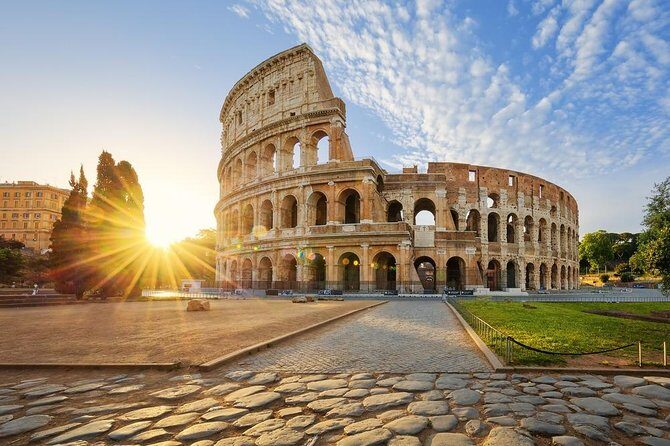
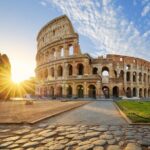
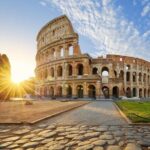
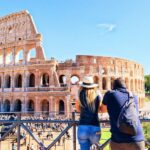
Gladiators start at the Colosseum gates. This 3-hour Rome tour focuses on the Colosseum, then keeps going straight into the Roman Forum and Palatine Hill so the story of ancient Rome actually connects. I like how the tour doesn’t treat these sites like separate postcards—it ties gladiator legend, politics, and imperial power into one walking route.
Two things I especially like: you get a guided walk through the Forum’s key monuments and road traces, including the Via Sacra wheel-ruts, and you also tour the Colosseum at the attic level (Floors 3–5), which helps you picture the building’s full scale. One drawback to plan for: this is a walking tour with steps and uneven archaeological surfaces, so it can be tiring in heat and not a good match if you prefer flat, easy routes.
In This Review
- Key takeaways before you go
- Meeting point at Largo Corrado Ricci and how to stay on schedule
- Roman Forum: where politics, religion, and power all overlap
- Palatine Hill: emperors lived here, and legends still linger
- Inside the Colosseum, Floors 3–5: gladiators without the fog of legend
- Tickets, headsets, and why $92 can feel like a good deal
- Walking pace tips so the tour feels fun, not rushed
- Who this tour is for, and who should consider a different option
- Should you book the Colosseum, Forum & Palatine Hill tour?
- FAQ
- How long is the tour?
- Where do I meet the guide?
- What language is the tour guide?
- How big is the group?
- Does the tour include tickets?
- Are headsets provided?
- Is transportation included?
- Is food included?
- What should I bring?
- Is the tour suitable for wheelchair users?
- Is the tour refundable if plans change?
Key takeaways before you go
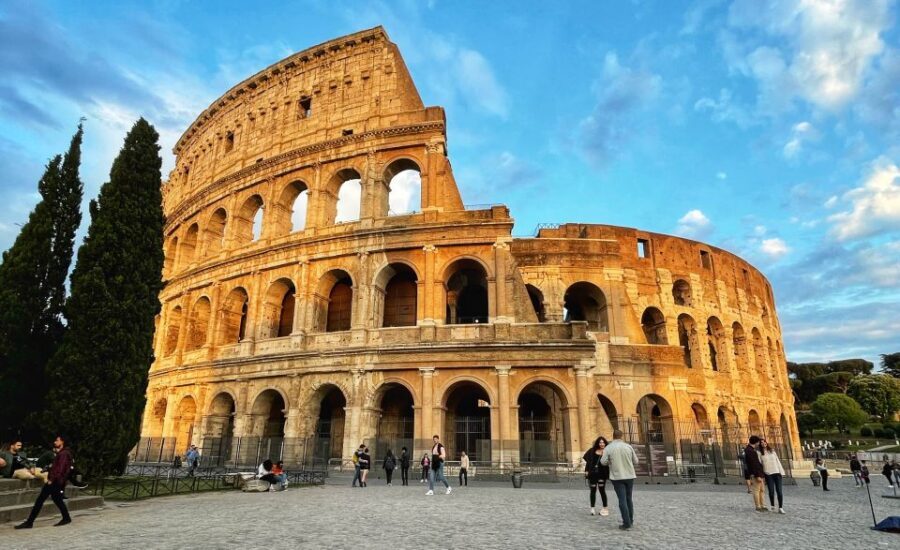
- Colosseum attics (Floors 3–5): you see the arena complex from a higher angle that makes the venue feel bigger
- Forum highlights in one hour: Senate, Vestal Virgins house, key basilicas, and major temples are all covered
- Via Sacra wheel-ruts: you get a physical detail that helps legends feel more real
- Palatine Hill emperor palaces: you walk where emperors lived, not just where they were described
- Small-group pacing: headsets are provided for groups of 6 or more, so you can actually hear the guide
Meeting point at Largo Corrado Ricci and how to stay on schedule
The day starts at Largo Corrado Ricci, 43a, right in front of Cafe/Restaurant Angelino ai Fori. Look for the Through Eternity sign or flag. This matters because the whole timing of the tour depends on you getting there before the group moves into the sites.
The tour length is listed as 3 hours, with multiple start times based on availability. That’s short enough to fit into a first or second day in Rome, but it also means the guide keeps a steady rhythm. I suggest treating it like an efficient walking circuit rather than a slow sightseeing stroll.
One more practical note: you’ll be walking on large archaeological sites with steps and uneven surfaces. Comfortable shoes aren’t optional here. If you’re bringing a bottle of water, you’ll thank yourself before the Forum section gets going.
Other Forum, Palatine & Colosseum combo tours we've reviewed
Roman Forum: where politics, religion, and power all overlap
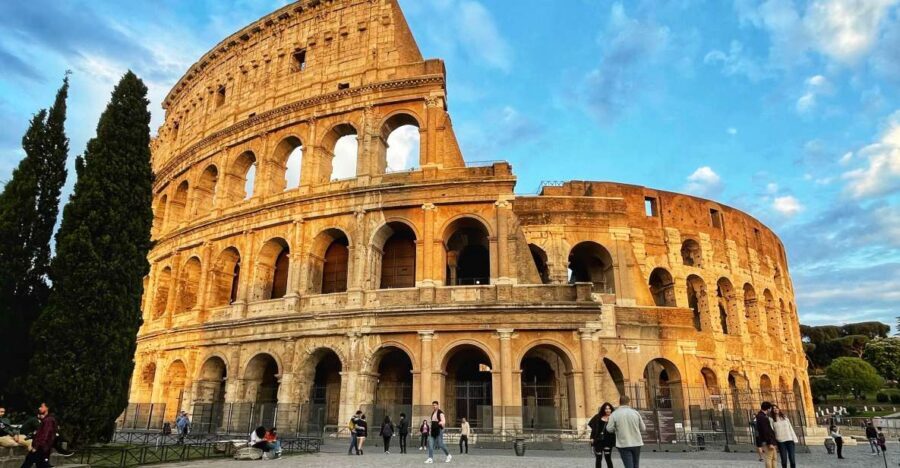
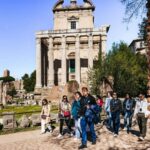
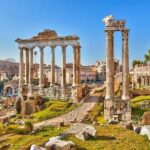
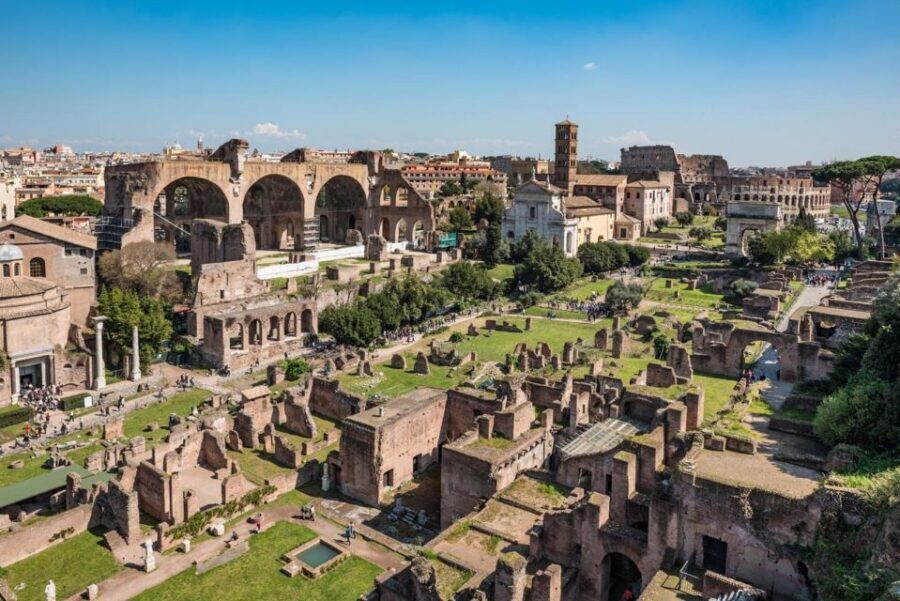
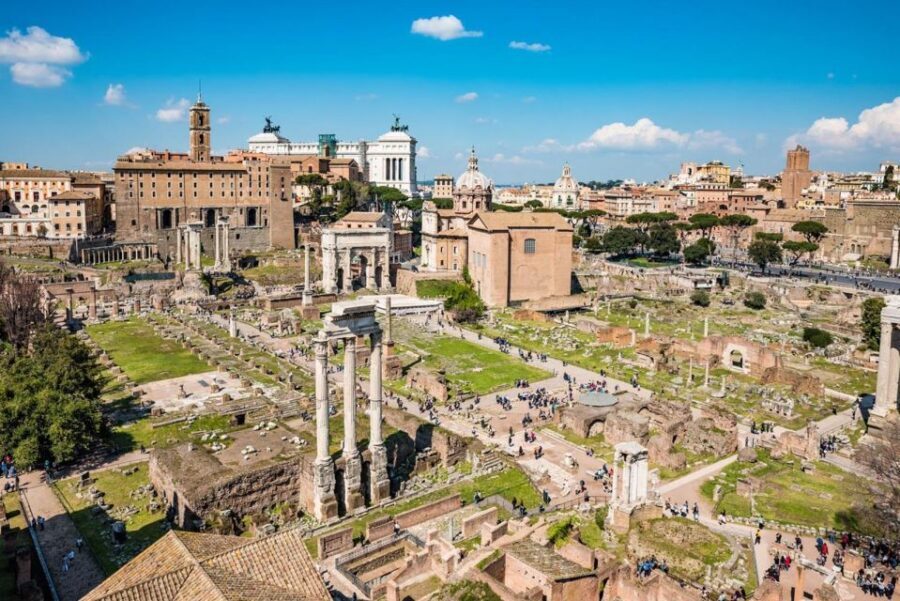
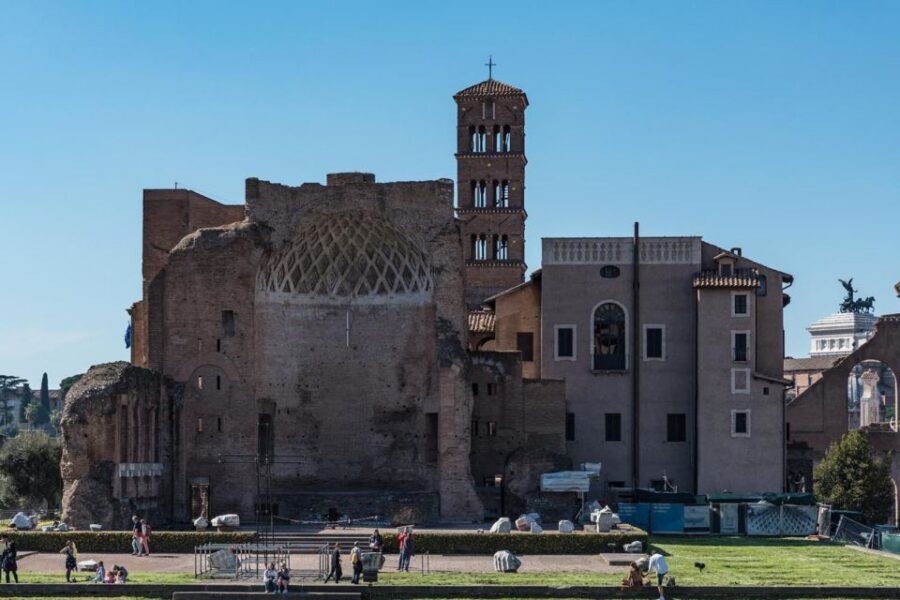
Your Forum stop is guided for about an hour, and it’s one of the best ways to understand Rome without needing a textbook. The Roman Forum was the political heart of the ancient city, so the guide can point out how different institutions sat side by side. Even if you only remember a few names, the overall layout makes more sense when you walk it in sequence.
Here’s what you’ll be shown during the Forum portion:
- the Senate
- the gardens area
- the House of the Vestal Virgins
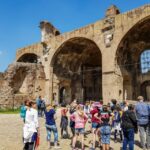
- the Basilica of Julia and the Basilica of Maxentius
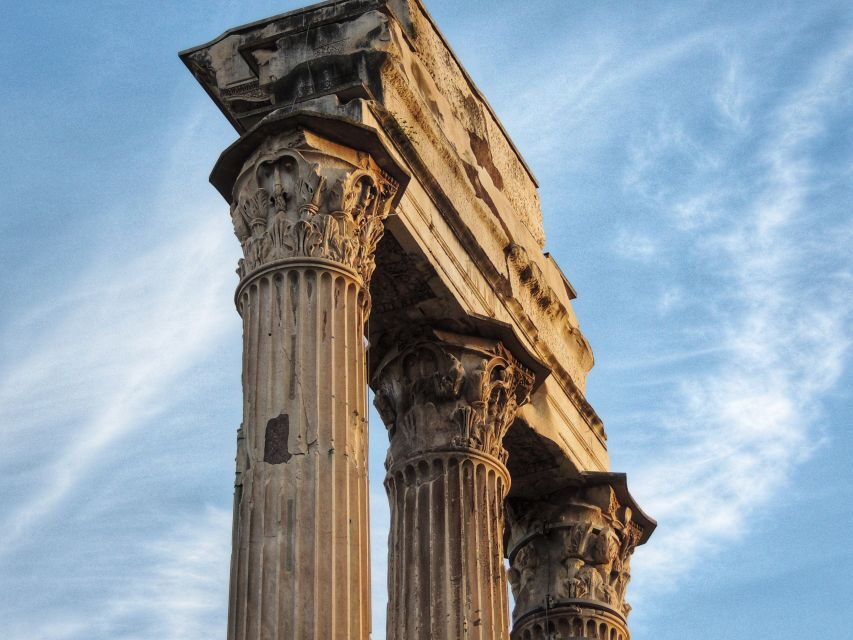
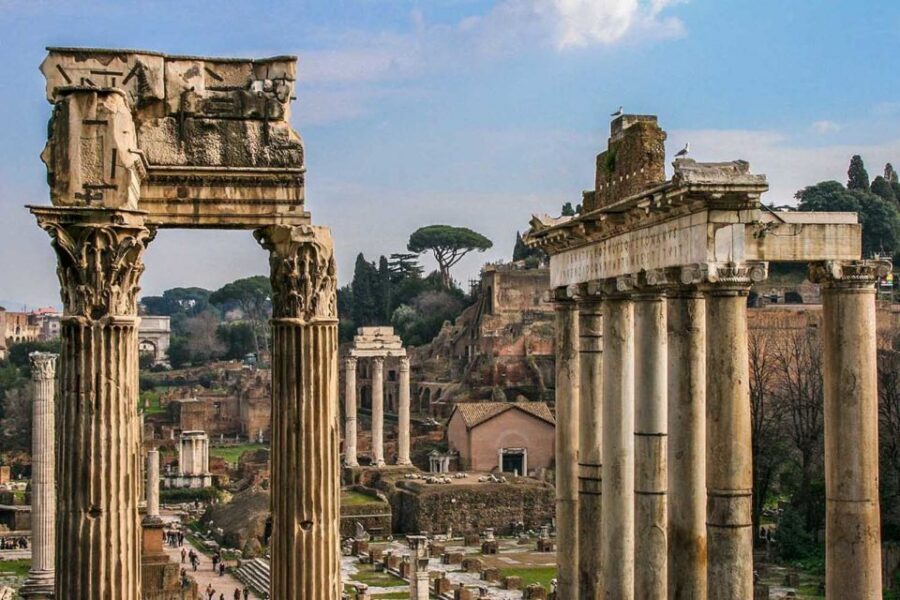
- temples including Saturn and Castor and Pollux
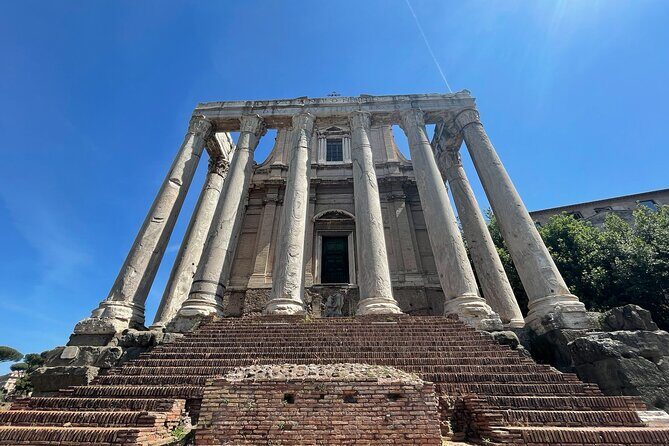
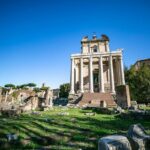
- the Temple of Antoninus and Faustina
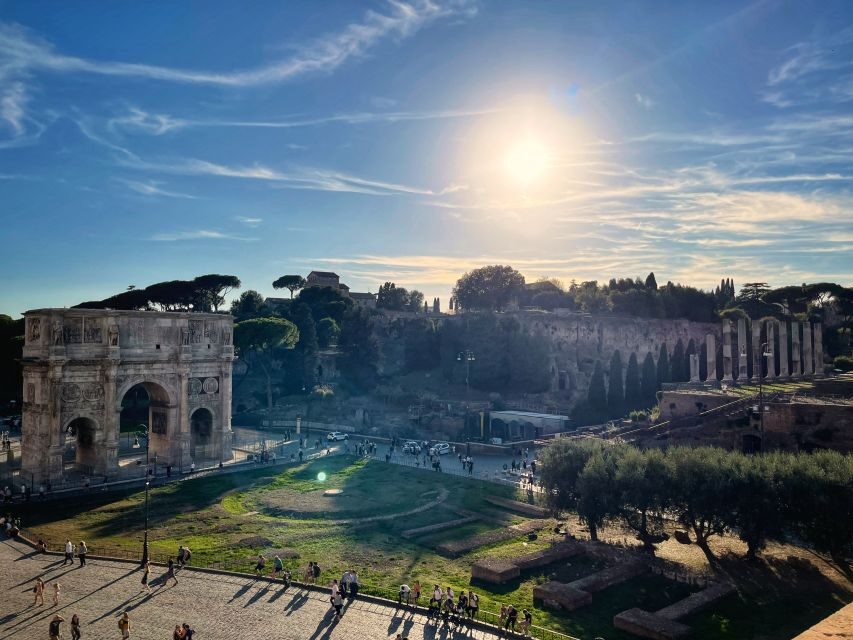
- the Arch of Titus and the Arch of Septimius Severus
- and you’ll walk along one of the most important Roman roads, the Via Sacra, where you can still see the wheel-ruts
What’s valuable about this isn’t just the list. It’s how the guide uses those pieces to explain cause and effect. For example, once you see how the House of the Vestal Virgins connects to public life and religion, gladiator stories later in the day won’t feel like they’re floating in the air. You’ll start seeing Rome as a system: politics, belief, and entertainment all feeding the same audience.
The Via Sacra detail is also a standout. Wheel-ruts sound like a minor archaeological crumb until you’re standing there and realize carts and ceremonies crossed this road for centuries. That’s the kind of concrete detail that makes the whole area hit differently than photos.
Palatine Hill: emperors lived here, and legends still linger
After the Forum, the tour moves to Palatine Hill for another guided hour. Palatine Hill is often called one of the most beautiful parts of ancient Rome, but the bigger reason to come is what it represents: it’s one of the oldest areas tied to Rome’s origin stories.
You’ll be shown the palaces of emperors, which changes how you interpret the site. This is not just ruins for viewing—it’s where power had a home. When you’re standing there, you can connect the emperors you’ve heard about in names and dates to the idea of daily control: the city’s leadership wasn’t only political. It was physical, built into where people walked and ruled.
The guide also connects Palatine Hill to legend—how Romulus and Remus were discovered by the she-wolf, and how Romulus later founded Rome. Even if you treat the story as myth, it helps explain why Romans cared so much about place. The hill becomes a symbolic anchor for identity, not just a scenic stop.
One practical consideration: Palatine Hill is part of a walking route across ancient terrain. If you’re sensitive to stairs or uneven ground, this is where you’ll feel it most. Pace yourself, and use the water you brought.
Inside the Colosseum, Floors 3–5: gladiators without the fog of legend
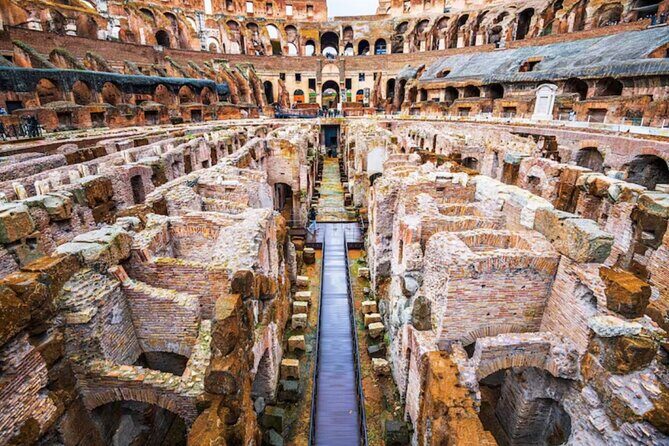
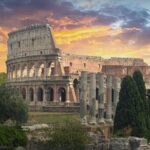
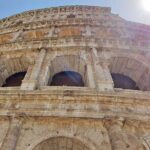
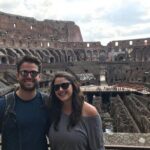
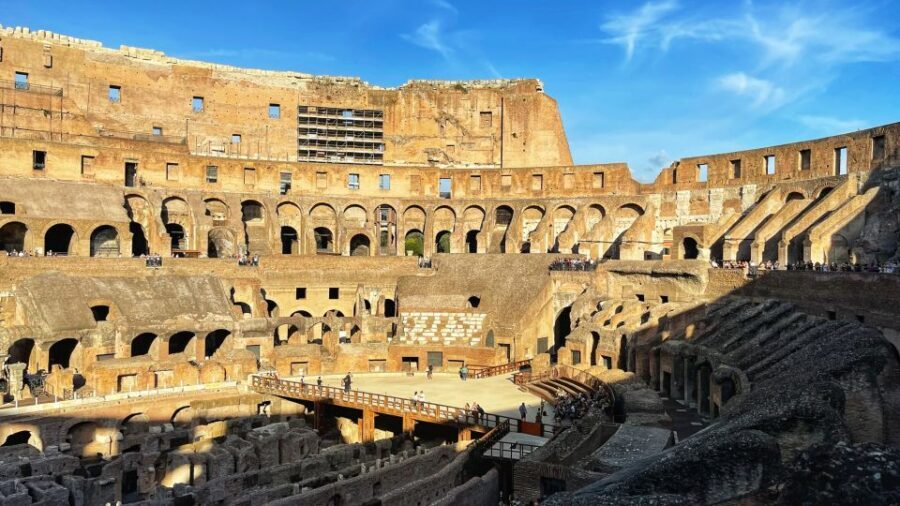
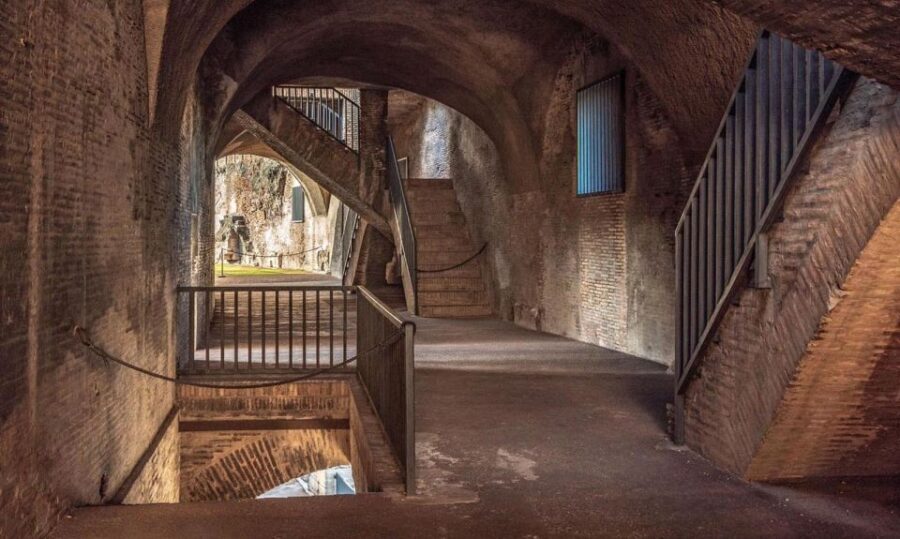
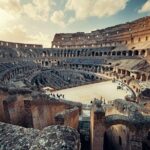
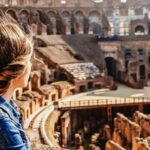
The Colosseum portion is guided for about an hour, and the entry is specifically through the Colosseum Attic area, Floors 3–5. That matters. From lower levels, you can feel swallowed by the arena. From higher levels, you tend to understand the building’s layout and size more clearly, and that helps you picture what the crowd experienced.
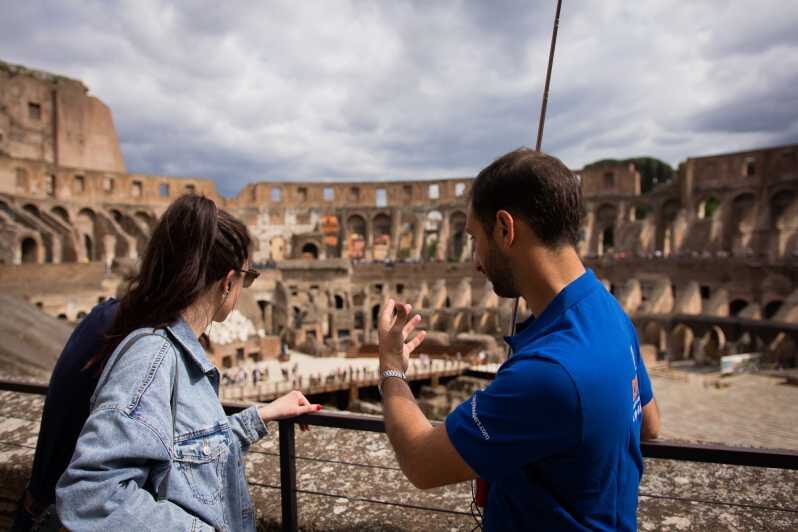
This part of the tour is where the guide tackles gladiators directly: the tour is designed to separate fact from fiction and to explain what people actually believed versus what later stories made louder. Gladiator games are legendary, but the point here is context—what kind of spectacle it was, who it was for, and why the Colosseum was built to do that job.
A couple details you’ll hear that really help: the Colosseum was built on a vast scale in less than ten years, and the spectacles were unlike anything seen before or since. The idea wasn’t only to entertain the public. It was also designed to satisfy the emperor. That explains why the Colosseum feels so theatrical even today.
You’ll also learn how the building itself supports the story. The guided route at the attic levels tends to give you viewpoints that make the arena complex and the surrounding structure easier to grasp. So even if you’ve seen the Colosseum before, this style of visit can still change what you notice.
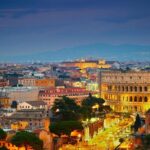
The tour finishes at the Colosseum, which is handy if you want to do additional independent exploring afterward, like grabbing photos from viewpoints you can access on foot.
Tickets, headsets, and why $92 can feel like a good deal
At $92 per person for a 3-hour experience, you’re not just paying for a walk-through. You’re paying for:
- entrance tickets
- a guide
- all fees and taxes
- and headsets if the group is 6 or more (this helps a lot when you’re trying to listen in windy open spaces)
That’s the main value equation for this tour. With the Colosseum, Roman Forum, and Palatine Hill, a self-guided visit often turns into time spent figuring out what you’re looking at. Here, the guide helps you connect monuments, road traces, and imperial locations quickly—so your time gets used for understanding instead of confusion.
Also, the small-group format helps. The tour is described as limited in size, with a small-group cap listed as up to 10 participants and also described as limited to 16. Either way, it’s not a huge crowd shuffle. In practice, you should expect a more personal pace than you’d get with a mega-tour.
Food and beverages aren’t included. That’s normal for a 3-hour time block, but it does mean you should plan a snack or plan to eat after. I’d also bring water since you’re covering big outdoor sites.
Other Roman Forum tours we've reviewed
Walking pace tips so the tour feels fun, not rushed
This is a classic Rome “see it, feel it, walk it” route. You can absolutely enjoy it, but you’ll get the best experience if you plan your body for the day.
Here are the basics I’d follow:
- Wear comfortable shoes you’ve already broken in
- Bring water (steps plus heat plus open ruins adds up)
- Avoid luggage or large bags, since luggage isn’t allowed
- If you’re traveling with friends, agree on a meeting rhythm. The tour has a set flow, and it’s easy to fall behind on uneven ground
If you’re thinking about photos, I’d prioritize grabbing a few wider shots first, then let the guide’s explanations lead. It’s easy to take lots of pictures and still miss the meaning. The attic-level Colosseum viewpoint is a good example: you’ll understand it better if you listen for why that angle matters.
One more listening tip: there’s at least one review note about the guide speaking at a slower pace. That’s a reminder to use headsets when provided, and don’t hesitate to ask for clarification in English if you miss a key point.
Who this tour is for, and who should consider a different option
This tour is a strong match if you want an efficient, guided overview that connects:
- gladiator-era spectacle at the Colosseum
- the political and religious core of ancient Rome in the Forum
- and the emperor-focused story on Palatine Hill
It’s also ideal if you like learning context while you walk. You’ll cover many named monuments and features in a short time, and the guide’s job is to make those names click.
It may not be your best choice if you:
- need an accessible route (wheelchair users aren’t suitable, based on the tour info)
- dislike uneven terrain and stairs
- want a very slow pace with lots of independent stopping
If you’re the type who likes to understand the “why” behind the ruins, this style of tour fits. If you just want a flexible, wander-at-will day, you might prefer separate tickets and a less structured plan.
Should you book the Colosseum, Forum & Palatine Hill tour?
I’d book this if you want the classic Rome power trio—Colosseum plus Roman Forum plus Palatine Hill—done in a way that helps you understand what you’re seeing in real time. The inclusion of entrance tickets and headsets, plus the guided focus (especially gladiators explained with fact versus fiction), makes the $92 price feel more reasonable than a basic sightseeing add-on.
You should think twice if walking uneven archaeological ground is a challenge for you, or if you’re planning a day that depends on perfect timing and minimal walking. Also, keep an eye on day-of updates: due to the Jubilee, some monuments may be under restoration, and changes can happen.
If you want a guided route that turns big famous ruins into an organized story, this tour is a solid choice. It’s short enough to stay manageable, and guided enough to feel like you learned something beyond the obvious.
FAQ
How long is the tour?
The tour lasts 3 hours.
Where do I meet the guide?
Meet your guide in front of Cafe/Restaurant Angelino ai Fori at Largo Corrado Ricci, 43a, with a Through Eternity sign or flag.
What language is the tour guide?
The tour is guided in English.
How big is the group?
It’s described as a small group with a cap listed as up to 10 participants, and also described as limited to sixteen. Check your confirmation for the exact group size.
Does the tour include tickets?
Yes. Entrance tickets are included, along with all fees and taxes.
Are headsets provided?
Headsets are provided for groups of 6 or more.
Is transportation included?
No. Transportation to and from the meeting and end points is not included.
Is food included?
No. Food and beverages are not included.
What should I bring?
Bring comfortable shoes and water.
Is the tour suitable for wheelchair users?
No. The tour is not suitable for wheelchair users, since it involves walking across large archaeological sites with steps and uneven surfaces.
Is the tour refundable if plans change?
The activity is listed as non-refundable. Also, due to Jubilee-related restoration, some monuments may have changes, so pay attention to any messages you receive.