REVIEW · ROME
Roman Forum Myths and Legends Private Guided Tour
Book on Viator →Operated by Kirba Tours · Bookable on Viator
Myths feel real in Rome’s Forum ruins. This private walkthrough of the Roman Forum turns famous stones into stories you can picture, from Romulus and Remus to Caesar’s afterlife cult.
I love how the guide connects myth to everyday Roman power, showing why gods, heroes, and politics were tangled together. I also like the practical setup: included entry to the Roman Forum, Palatine Hill, and Imperial Forums, plus a headset if your group is larger than about six. One possible drawback: with a 2-hour pace, you’ll see a lot of stops, but you won’t get long, slow hangs in every single ruin.
In This Review
- Key Highlights Worth Your Attention
- Roman Forum Myths: Why This Private Format Works
- Meeting Point and The Smart Way to Start
- Stop-by-Stop: How the Myths Tie Into Power and Daily Life
- Lapis Niger: Romulus, a Black-Stone Shrine, and a Shocking Discovery
- Basilica Emilia: Politics in Stone, Laws in Public
- Temple of Antoninus Pius and Faustina: Love as Imperial Messaging
- Regia and the Sacred Power of Counsel
- Temple of Vesta and the Vestal Virgins: Eternal Flame, Serious Consequences
- Fonte di Giuturna: When a Nymph Becomes a Healing Spring
- Temple of the Dioscuri (Castor and Pollux): A Victory Promise
- Lacus Curtius: The Chasm Myth That Turns Into a Moral
- Temple of Saturn: Where the State Treasury Lived
- Umbilicus Urbis: The Center of Rome, and the Hidden Rules
- Arco di Settimio Severo: Imperial Pageantry in Stone
- Miliarium Aureum and the Idea of All Roads
- Basilica Julia: Courts, Trials, and Government Offices
- Curia Julia: The Senate’s Home Base
- Temple of Divus Julius: Caesar Becomes a Cult
- What About Colosseum?
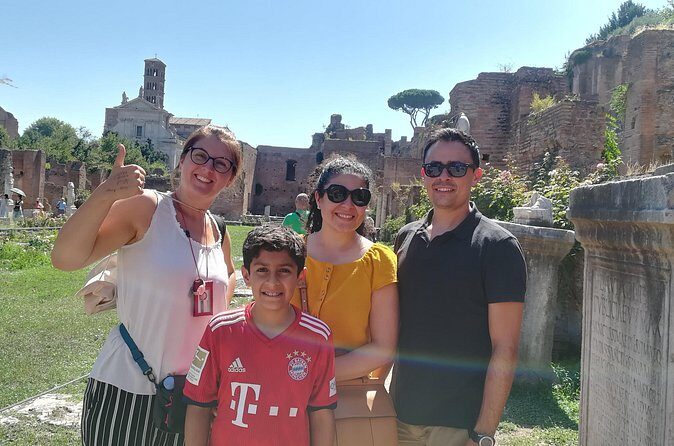
- The Guide Factor: Hearing the Forum Instead of Guessing
- Is It Worth $286.60 Per Person?
- Should You Book This Roman Forum Myths Tour?
- FAQ
- FAQ
- How long is the Roman Forum myths and legends private tour?
- What is included with the tour price?
- Is this tour private?
- Do I need an ID or passport to enter?
- Does the tour include the Colosseum?
- What are the cancellation terms?
Key Highlights Worth Your Attention
- A private guide keeps the pace human and the stories focused
- Headset audio is included so you can actually hear the guide
- Stops center on how Rome mixed religion, politics, and legend
- You’ll visit iconic myth sites like Lacus Curtius and the Temple of Vesta
- Included admission covers the Roman Forum area plus Palatine Hill and Imperial Forums
- The timing is tight enough to fit well with a broader Rome day plan
Roman Forum Myths: Why This Private Format Works
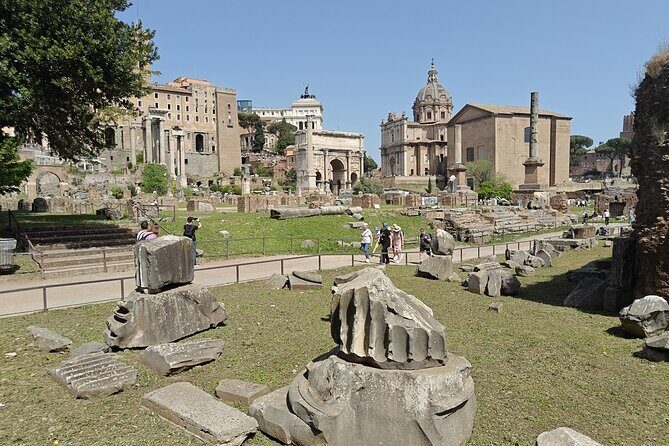
Rome’s Forum isn’t just a museum yard. It’s a place where people once argued law, made political deals, staged religious life, and told stories that explained the world. A private tour matters here because the Forum can feel like “columns and walls” if you’re left alone with your phone and a vague map.
This tour is designed to do the opposite. The route focuses on myth and legend, but it keeps landing on real Roman institutions: councils, priestesses, state rituals, and public buildings. That’s what makes the myths stick. You’re not only learning who Romulus was or what happened to Curtius. You’re also seeing why Romans cared so much about these stories in the first place.
Price-wise, $286.60 per person is not cheap, especially if you’re used to big-bus sightseeing. But you’re paying for a guide-led, time-controlled experience plus included tickets to the Forum zone and nearby areas. For many couples or small groups, “one guide for your group” can end up being better value than buying separate entry tickets and trying to self-navigate with no context.
Other Roman Forum tours we've reviewed
Meeting Point and The Smart Way to Start
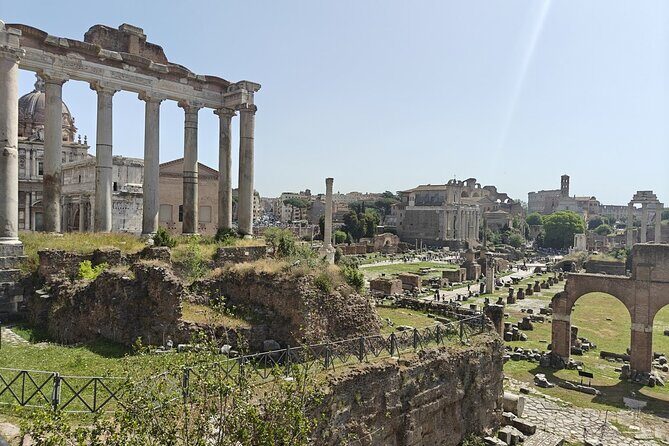
You’ll meet at Largo della Salara Vecchia (L.go della Salara Vecchia, 00186 Roma). The tour ends back at the same spot, which is handy when you’re trying to build the rest of your day without mystery logistics.
The start point puts you close to the Forum’s core, so you’re not wasting the first part of your two-hour window on transit and orientation. You’ll want to arrive a bit early so you’re not rushing into ancient crowds at the gate.
One more practical note: this is a mobile ticket tour, and you’ll need to provide full participant names that match ID or passport. If you’ve ever tried to fix a name mismatch in a hurry, you already know why that detail matters.
Stop-by-Stop: How the Myths Tie Into Power and Daily Life
Lapis Niger: Romulus, a Black-Stone Shrine, and a Shocking Discovery
Your first stop is the Lapis Niger, the Black Stone shrine tucked into the Roman Forum. The legend says it marks the spot where Romulus, Rome’s legendary founder, was buried after being murdered by his own people. That’s a pretty dramatic origin story: the “savior founder” ends up as a cautionary tale inside a sacred site.
What I love here is the contrast between myth and reality. The shrine is ancient, dating to the 6th century BCE tradition, but it wasn’t found until excavations in the late 1800s. In 1899, archaeologists discovered it by accident while digging beneath a medieval pavement. That’s the kind of detail that makes the Forum feel alive: even after centuries of study, Rome still has surprises.
Drawback to expect: this is a short stop (about five minutes). It’s enough time to understand what it is and why it mattered, but not enough to get lost in it.
Basilica Emilia: Politics in Stone, Laws in Public
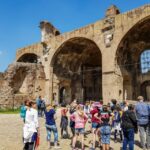
Next is Basilica Emilia, one of those buildings that screams Roman efficiency. This was a major public structure where senators met and where legal and commercial life ran through the same space.
The original basilica dates to the 2nd century BCE, then it was destroyed by fire and rebuilt multiple times. Today you see ruins, but the design still tells you what Romans wanted: gatherings in a setting that supported daily work—court business, meetings, and transactions.
If you like history that feels functional instead of purely ceremonial, this stop delivers. Myths may tell you why Rome believed what it believed, but basilicas show you how Rome acted on it.
Other private Roman Forum tours we've reviewed
Temple of Antoninus Pius and Faustina: Love as Imperial Messaging
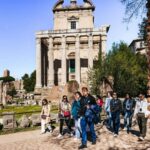
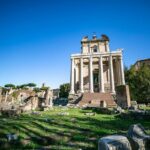
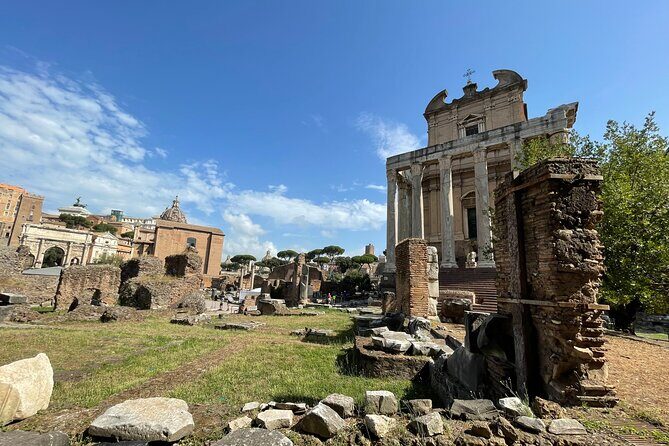
The Temple of Antoninus Pius and Faustina is tied to the deified emperor Antoninus Pius and his wife, Faustina the Elder. The legend around the temple frames it as a monument to their love for each other.
That matters because it shows how Romans used religion and architecture to shape public memory. Antoninus Pius is described as having a peaceful reign and supporting arts and sciences, while Faustina the Elder is linked to beauty and philanthropic work. So even a “love story” temple is also political branding.
If you’re the type who likes to notice how power communicates, you’ll appreciate how myth and image-making overlap here.
Regia and the Sacred Power of Counsel
The Regia served as a king’s residence and later the home of the pontifex maximus, the chief priest of Rome. According to legend, it was built after advice from the goddess Egeria, who guided Numa Pompilius on state matters and religion.
This is one of those stops where the story explains the structure. Rome didn’t split “religion” from “government” the way modern people often do. The Regia represents that blend: sacred authority sitting at the center of ruling.
Only a few ruins remain, so the site can feel small, but the idea behind it is big.
Temple of Vesta and the Vestal Virgins: Eternal Flame, Serious Consequences
Near the Regia sits the Temple of Vesta, home to the sacred flame tended by the Vestal Virgins. These were six priestesses chosen young (between six and ten), required to stay celibate for thirty years, and tasked with keeping the flame burning as a symbol of Rome’s eternal life.
This is where the tour’s theme gets sharp: myths and religion weren’t just stories. They were seen as protective systems. The Vestals were respected, and their status was described as nearly equal to senators. Violating vows was treated with extreme severity, including the grim punishment of burial alive.
Then you continue to the Casa delle Vestali, the broader complex tied to their living quarters, a temple to Vesta, and administrative and ritual spaces. The tour gives you the bigger picture: the priestesses weren’t “extras” in the background. They were part of the state’s machinery.
Potential drawback: this section is packed with weighty topics. If you like a lighter tone, you might want a quick mental reset between stops.
Fonte di Giuturna: When a Nymph Becomes a Healing Spring
At Fonte di Giuturna, the legend shifts into myth with a practical payoff. Juturna is the goddess of fountains, wells, and springs. In the story, Jupiter desires her, she escapes and is transformed into a spring, known as the Juturna Spring.
Romans believed the spring had healing powers, and people came from around Rome to bathe there. It’s a good reminder that in ancient Rome, religious belief could translate directly into everyday habits like visiting a water source for health.
This stop is short (about five minutes), but it lands well if you want variety from the heavier civic and political sites.
Temple of the Dioscuri (Castor and Pollux): A Victory Promise
The tour then highlights the twin gods Castor and Pollux, also known as the Dioscuri. The legend links them to a major battle—the Battle of Lake Regillus—between Rome and the Latin League in the late 6th century BCE.
After the battle, the Dioscuri are said to have appeared on horseback at the Forum and announced Rome’s victory. After that, a temple was dedicated to them, and the story connects the gods to ongoing protection of the Roman state. The Temple of Castor and Pollux still partially stands today.
This is myth as reassurance: Rome didn’t just want to win. It wanted to believe its gods would help it keep winning.
Lacus Curtius: The Chasm Myth That Turns Into a Moral
Next is Lacus Curtius, tied to a legend about a young soldier named Curtius who sacrifices himself to save Rome. The story says a deep chasm opened in the Forum, and the Sibylline Books prophesied Rome would be saved only if the most valuable possession was thrown into the abyss.
Curtius rides into the chasm in full armor and disappears, and the chasm closes. A small lake marks the spot afterward.
I like this stop because it shows how Romans built moral lessons into their geography. The Lacus Curtius becomes a symbol of devotion and self-sacrifice—one more way myth teaches behavior.
Temple of Saturn: Where the State Treasury Lived
The Temple of Saturn is described as built at the site where Saturn supposedly established his reign and brought civilization to Italy, teaching agriculture. In early Rome, agriculture wasn’t just farming—it was survival. That makes Saturn’s importance make sense.
The temple also housed the state treasury. During Saturnalia (Dec 17 to Dec 23), the treasury opened and gifts were exchanged. It’s the kind of detail that helps you see Roman religion as practical statecraft: where money is kept is also where the god is honored.
A thoughtful tradeoff here: because this is part of a long sequence, you’ll get the core story but likely not deep archaeological detail.
Umbilicus Urbis: The Center of Rome, and the Hidden Rules
The Umbilicus Urbis is a conical brick structure with a door leading to an underground cavity. According to Plutarch’s account, Romulus dug a pit in the Comitium, offered gifts, and threw in soil from followers’ homelands. This pit was called the Mundus, considered the center of Rome’s sacred boundary.
The Mundus was opened only three days a year to communicate between the living and the dead, and public activities were considered impious during those days.
This stop is small but conceptually huge. You’re looking at a marker of sacred time and sacred space—rules that shaped how people moved through civic life.
Arco di Settimio Severo: Imperial Pageantry in Stone
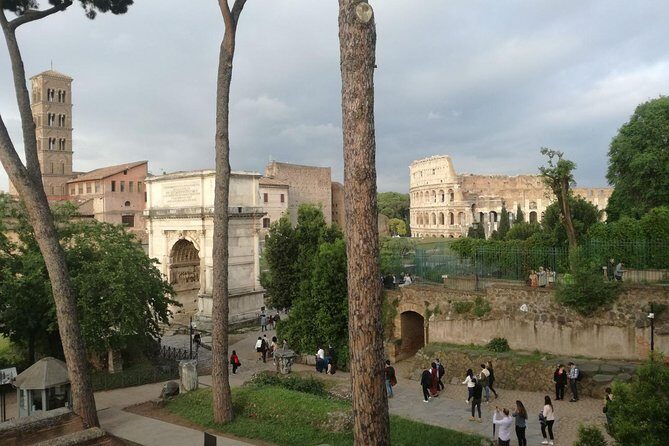
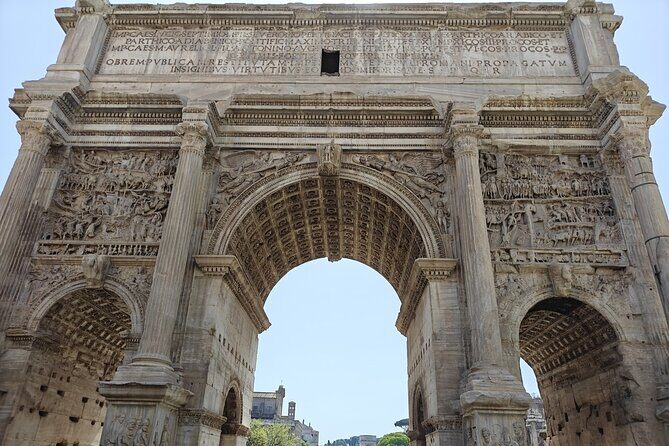
The tour moves to the Arch of Septimius Severus, described as one of the best-preserved triumphal arches in Rome. The reliefs depict scenes from the emperor’s military campaigns, and the arch later served as a model for the Arc de Triomphe in Paris.
It also functioned as a medieval fortress and is said to have survived earthquakes and floods. That’s a useful reminder: Roman engineering wasn’t only impressive in its day—it kept getting repurposed for centuries.
This stop is about 15 minutes. It’s a nice change from myth because it’s still propaganda, just in a more “look at the victory” style.
Miliarium Aureum and the Idea of All Roads
The tour also includes the Miliarium Aureum, Augustus’s central monument for measuring distances across the empire. It’s called one of the oldest surviving milestones in the world.
This is where the phrase all roads lead to Rome gets grounded. The Roman road network spread outward from the city, and the milestone served as the anchor point.
If you’re the kind of traveler who likes to connect sayings to real places, this is one of the best “lightbulb” stops.
Basilica Julia: Courts, Trials, and Government Offices
Basilica Julia gets you back to law and administration. In ancient Rome, it was a main place for trials and legal proceedings. Judges and lawyers had a raised platform or tribunal, while parties and witnesses occupied the spaces around.
It also served government functions and a meeting place for the Senate. That mix of legal and political life makes sense in the Forum setting: power didn’t hide in private offices.
You might not spend long here, but the explanation helps you read the ruins as a working building, not just scenery.
Curia Julia: The Senate’s Home Base
Then comes the Curia Julia, the meeting place of the Roman Senate, built by Julius Caesar in 44 BC after he became dictator. It replaced an older senate house.
The Senate met regularly to debate state matters, advised magistrates, and had authority to pass laws and approve treaties. The meetings were presided over by consuls or other magistrates when needed.
This stop is excellent for understanding how Rome’s myths fed into governance. Even when the stories are supernatural, the decisions were incredibly human.
Temple of Divus Julius: Caesar Becomes a Cult
Finally, the tour focuses on the Temple of Divus Julius, built by Augustus after Julius Caesar’s death. The temple is noted as the first in Rome dedicated to an individual who wasn’t a god or goddess.
The emotional background is part of the story. The plebs were reportedly devastated and mourned Caesar deeply. His funeral procession is said to have been among the largest in Roman history, with an estimated crowd over 100,000.
This is a strong ending because it links myth to belief and belief to politics. Caesar doesn’t only die—he’s transformed into an object of worship, and that worship is stamped into the city in stone.
What About Colosseum?
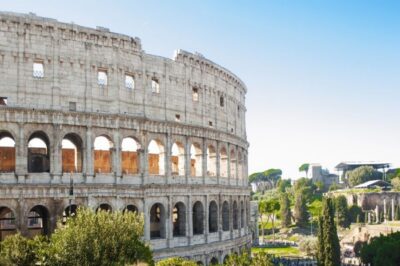
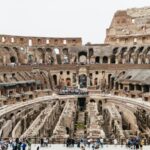
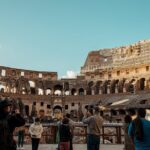
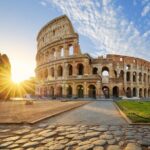
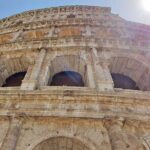
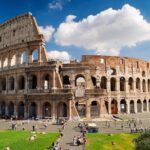
This tour’s included entry is for the Roman Forum, Palatine Hill, and Imperial Forums. Colosseum access is not included, so if your day plan includes that arena, plan for a separate ticket and timing. The upside: you get to focus on this specific zone without splitting attention.
The Guide Factor: Hearing the Forum Instead of Guessing
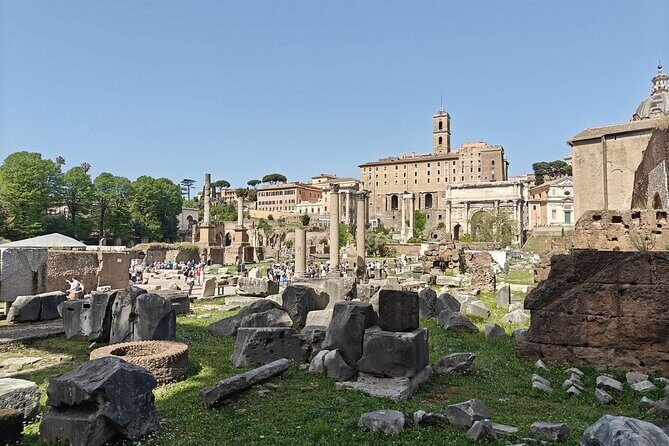
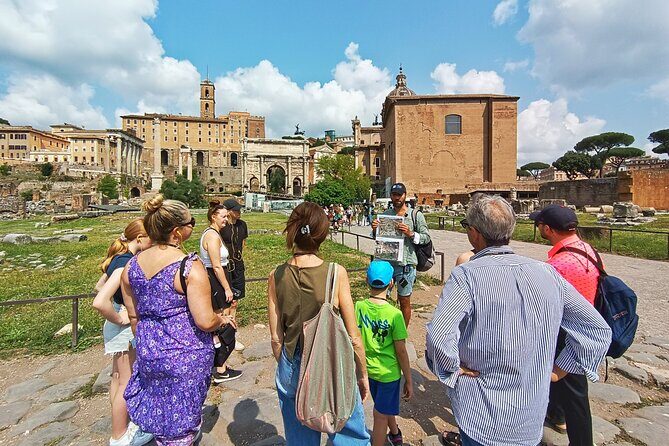
A big theme in the standout feedback is how the guide helps you visualize what you’re looking at. In particular, the guide Paolo is called out for bringing structures to life with historical stories and even artists’ renderings of various buildings and temples.
That’s not fluff. On a site like the Roman Forum, ruins can look like random fragments unless someone helps you “reconstruct” them in your mind. When you can picture a full basilica or a temple’s layout, the myths stop being floating trivia. They attach to real spaces.
Also, you’ll have a headset included to hear clearly, which is a practical advantage if your group is larger than a small handful.
Is It Worth $286.60 Per Person?
For a private tour, the price makes sense when you break it down like this:
- You’re paying for a full two-hour guide-led experience tied to myth storytelling.
- You get included admission to the Forum zone plus Palatine Hill and Imperial Forums.
- You’re getting a headset setup designed to improve clarity, not just “luck with acoustics.”
If you’re traveling solo, the per-person cost can feel steep compared with group tours. But if you’re a couple, friends, or a family group who will actually talk to the guide and ask questions, private pacing is usually worth the premium.
One caution: at this duration, you’ll cover a lot of ground. This is a best-fit tour if you want meaning and context fast, not if you’re hoping for slow, unhurried lingering.
Should You Book This Roman Forum Myths Tour?
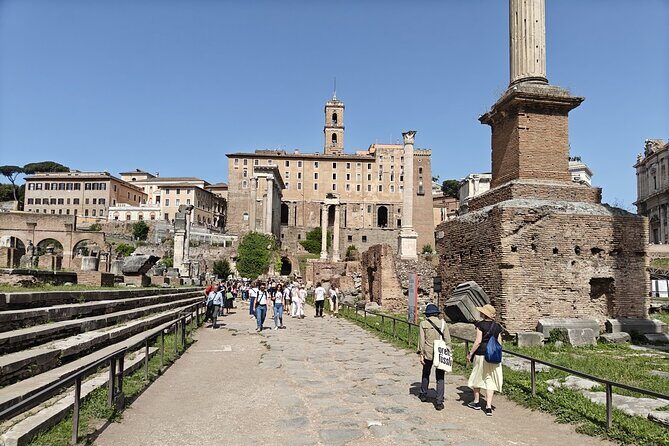
Book it if you want the Forum to make sense. If your goal is to understand how Romans blended gods, heroes, and state power into everyday civic life, this route is built for that. The stops are chosen to show the big idea repeatedly: myth wasn’t separate from politics—it was part of the system.
Skip it (or at least compare options) if you hate walking on uneven ancient ground or you want lots of “free time.” This is a structured, stop-heavy experience. It’s also not your Colosseum day ticket, so pair it thoughtfully with the rest of your sightseeing plans.
If you plan ahead, you’ll also benefit. This tour is typically booked about 16 days in advance on average, so last-minute decisions can shrink your options.
FAQ
FAQ
How long is the Roman Forum myths and legends private tour?
It’s approximately 2 hours.
What is included with the tour price?
Admission ticket(s) are included for the Roman Forum, Palatine Hill, and Imperial Forums, along with a Roman Forum guided tour with an official guide. Headsets are included to hear the guide clearly when needed.
Is this tour private?
Yes. It’s a private tour/activity, and only your group participates.
Do I need an ID or passport to enter?
Yes. Full names as written on your ID or passport are needed at the time of booking, and ID or passport is mandatory. If you show up without it, entry to the Roman Forum cannot be guaranteed.
Does the tour include the Colosseum?
No. Colosseum access is not included.
What are the cancellation terms?
You can cancel for free up to 24 hours before the experience’s start time for a full refund.
If you’d like, tell me your travel dates and group size, and I’ll help you decide whether this fits best on a first Rome day or as a focused second-day Roman Forum-and-Palatine visit.